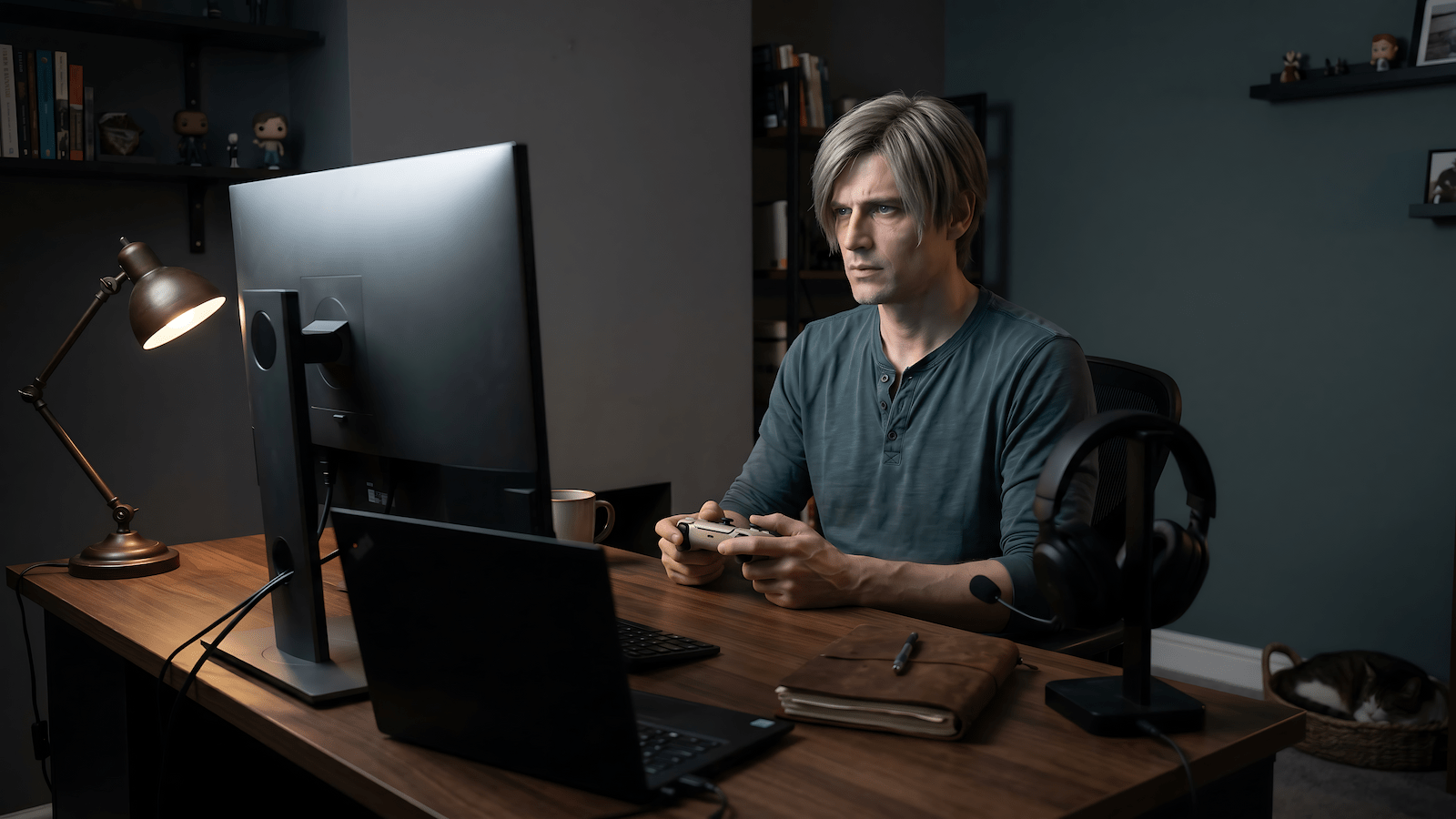
Remote work doesn’t end when you close Slack. The cognitive load follows you into the kitchen, into dinner, into whatever was supposed to be your evening. If you’re a remote worker who games, you already know this without needing it explained. What you might not know is that gaming breaks aren’t a guilty habit you’re sneaking in between tasks. They’re a legitimate recovery mechanism, and treating them like one changes how you use them.
The problem with most remote work advice on gaming breaks is that it frames gaming as a productivity trick. Take a 15-minute break, play something light, come back sharper. That framing misses the actual function. Gaming breaks for remote workers work because they force a hard context switch, not a soft one. Checking your phone isn’t a break. Scrolling isn’t a break. A properly chosen game creates a parallel cognitive environment that your brain has to inhabit fully, which is the only thing that actually interrupts the loop of work-adjacent thinking that grinds you down over a full remote workday.
What Cognitive Recovery Actually Looks Like After Hours in Front of a Screen
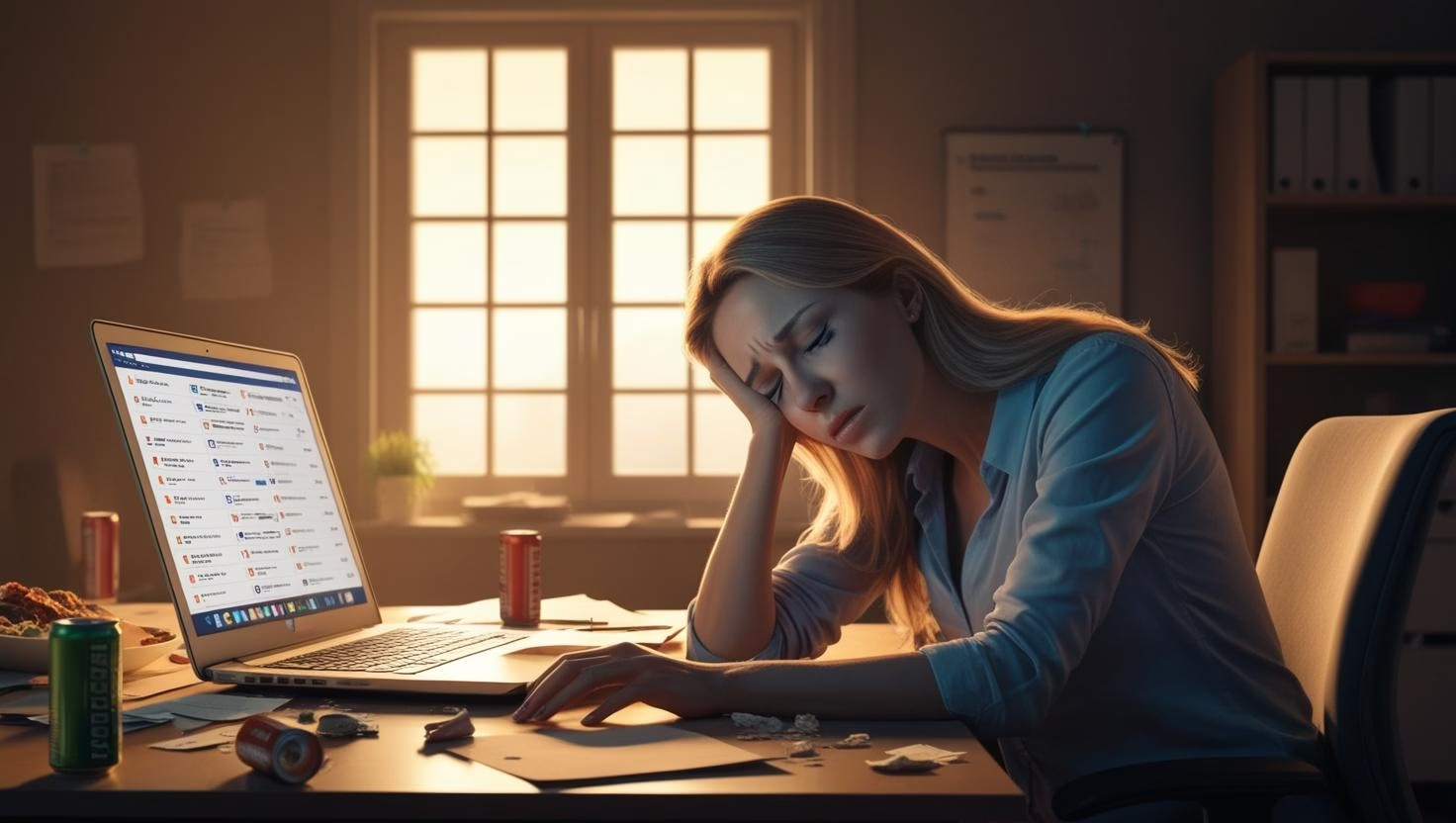
Screen fatigue in remote work is specific and cumulative. You’re not just tired from looking at a screen. You’re tired from the kind of attention that remote work demands, which is shallow, reactive, and constant. Email, Slack, video calls, async reviews, all of it requires the same narrow band of attention, and by mid-afternoon most remote workers are running on fumes without knowing why. The relationship between screen use and cognitive drain is well-documented in how remote workers report their energy levels, and it compounds across days, not just hours.
Gaming breaks interrupt this by demanding a different kind of attention. A strategy game requires planning across multiple variables. A shooter requires spatial reasoning and fast reaction loops. Even a relatively passive open-world game requires environmental reading and decision-making that activates different neural pathways than the ones you’ve been grinding at work. This isn’t a theory about dopamine. It’s a structural observation about what your brain is actually doing during different types of engagement. The switch matters because the mode matters.
Not All Gaming Breaks Are Equal for Remote Work Recovery
There’s a meaningful difference between gaming that resets you and gaming that extends the same kind of exhaustion you were trying to escape. Mobile games that run on notification loops and variable reward schedules aren’t recovery. They’re the same cognitive pattern as email, dressed up as entertainment. The same applies to anything competitive where you’re managing social dynamics, reputation, or performance anxiety. If the game makes you feel like you’re being watched or evaluated, it’s not doing the recovery job.
What works for remote work recovery specifically tends to be games with a clear beginning and end to a session, low social stakes, and a sense of forward progress that’s self-contained. Solo campaigns, turn-based strategy, open-world exploration, and well-designed puzzle games all fit this profile. The key variable isn’t genre. It’s whether the game lets you be fully absorbed without also triggering the same threat-detection and social-monitoring circuits that remote work runs on all day. This is also why the mental systems you build around remote work determine whether any kind of break actually functions as recovery or just as delay.
How to Structure Gaming Breaks So They Actually Work
The failure mode for gaming breaks in a remote work day is the same as any other unstructured break: you don’t know when it starts, so you don’t know when it ends. An hour disappears. You feel worse because now you’ve got guilt layered on top of fatigue. The fix isn’t willpower. It’s structure, which is the same fix for everything in a remote work discipline system that actually holds up over months rather than weeks.
A gaming break that functions as recovery has a defined trigger, a defined duration, and a defined endpoint. The trigger should be tied to a work state, not a clock. The right time to take a gaming break is when you notice the quality of your output degrading, not at 3pm because your calendar says so. The duration should be long enough to actually get absorbed, which for most games means at least 20 to 30 minutes. Anything shorter doesn’t give your brain time to fully disengage from work mode. The endpoint needs to be external, a timer not a save point, because games are designed to extend engagement indefinitely and that design works on everyone, including you.
Gaming and the Home Office Setup Problem
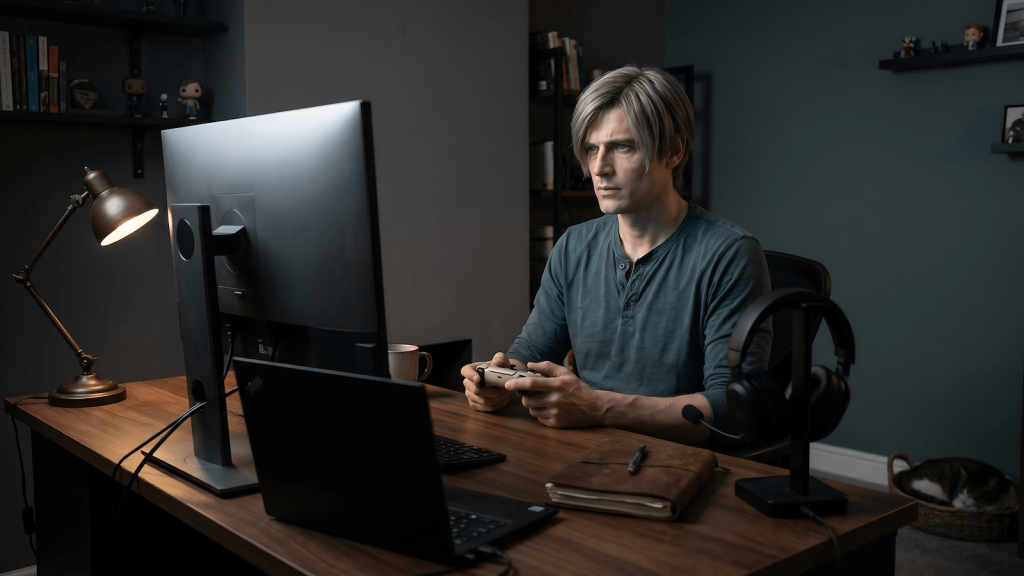
There’s a secondary angle here that most remote work content ignores entirely. Remote workers who game often have the most functional home office setups of anyone working from home, and they arrived there accidentally. A monitor calibrated for gaming is a better work monitor than whatever default sRGB nightmare most people are using. A chair selected for multi-hour gaming sessions is ergonomically superior to a dining chair. A headset with good isolation was bought for comms in multiplayer and also eliminates household noise during calls. If you game, you’ve probably already solved some of the home office gear problems that non-gaming remote workers are still struggling with, which means your setup is working double duty and you should be intentional about that overlap rather than treating the two uses as separate.
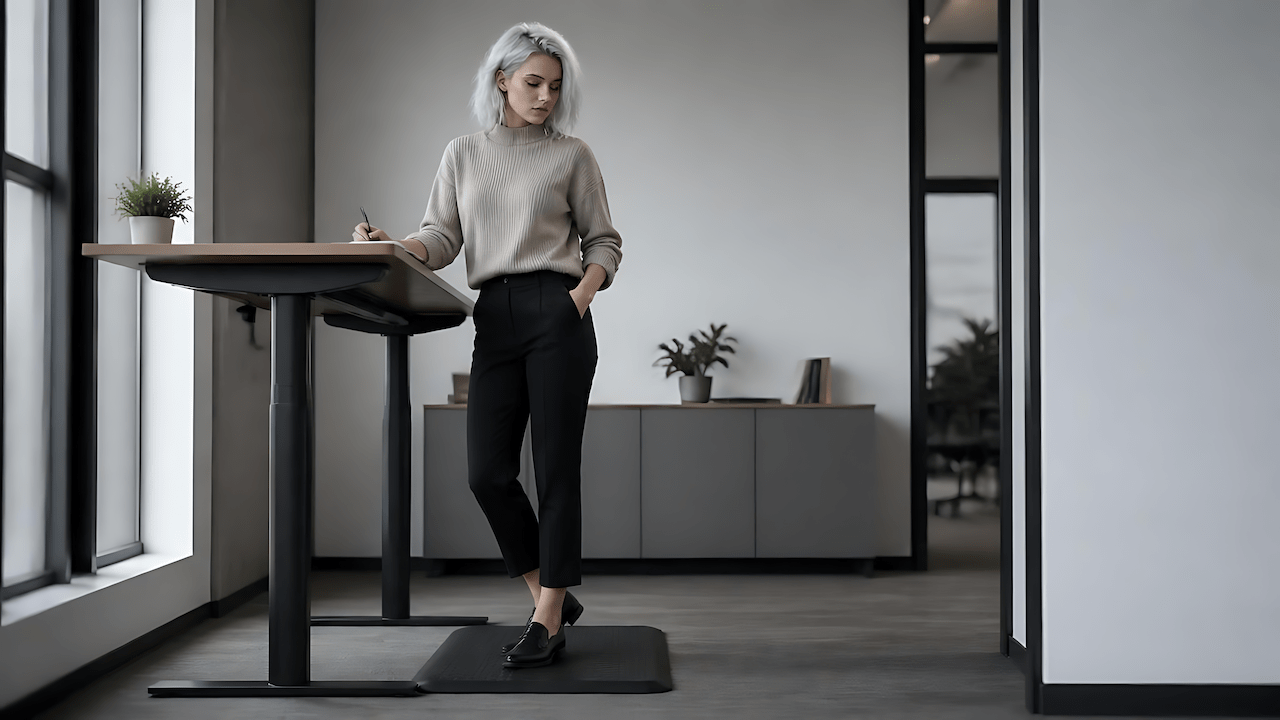
The desk situation is worth calling out specifically. A desk built around a gaming rig, wide surface, cable management, stable monitor arms, handles remote work loads better than most dedicated home office desks on the market, which are often designed for aesthetics over function. If you’re setting up or upgrading your workspace and you game, don’t buy two separate setups. Buy one setup that handles both well and understand that the gaming requirements are actually more demanding, which means the work requirements are already covered.
The Real Reason Remote Workers Who Game Burn Out Less
Burnout in remote work isn’t caused by working too hard in any single session. It’s caused by the gradual erosion of recovery, days and weeks where the cognitive debt accumulates faster than it gets paid down. Remote workers who have no hard-context-switch activity in their daily routine are the ones who hit the wall hardest, because they’ve got no mechanism for actually stopping the work-brain loop. Passive consumption, TV, scrolling, podcasts, doesn’t fully interrupt it. Sleep helps but doesn’t solve it if the waking hours have no genuine decompression built in.
Gaming, done with even minimal intentionality, provides something that most remote workers are missing: a daily activity where the only thing that matters is what’s happening in the game. Not your deliverables. Not your Slack. Not the background anxiety of whether you’re productive enough, visible enough, or secure enough in a role that nobody can physically observe you doing. If you already game, you’ve got the tool. The question is whether you’re using it as a recovery system or just as something you do when you finally run out of resistance at 11pm. There’s a significant difference between those two uses, and how you manage your work hours and mental uptime determines which one you’re actually doing.