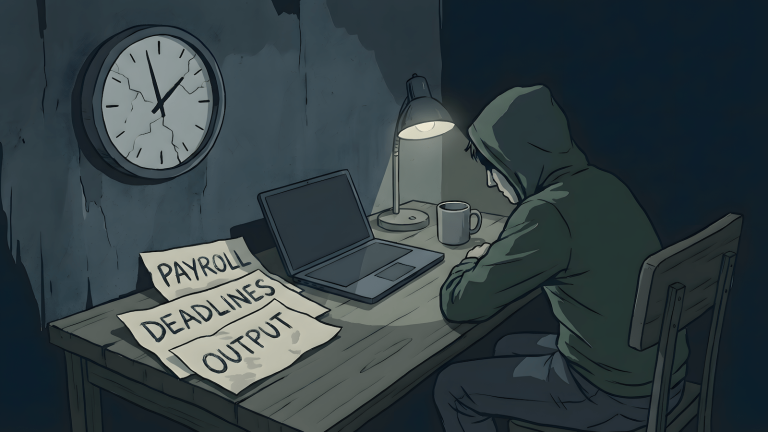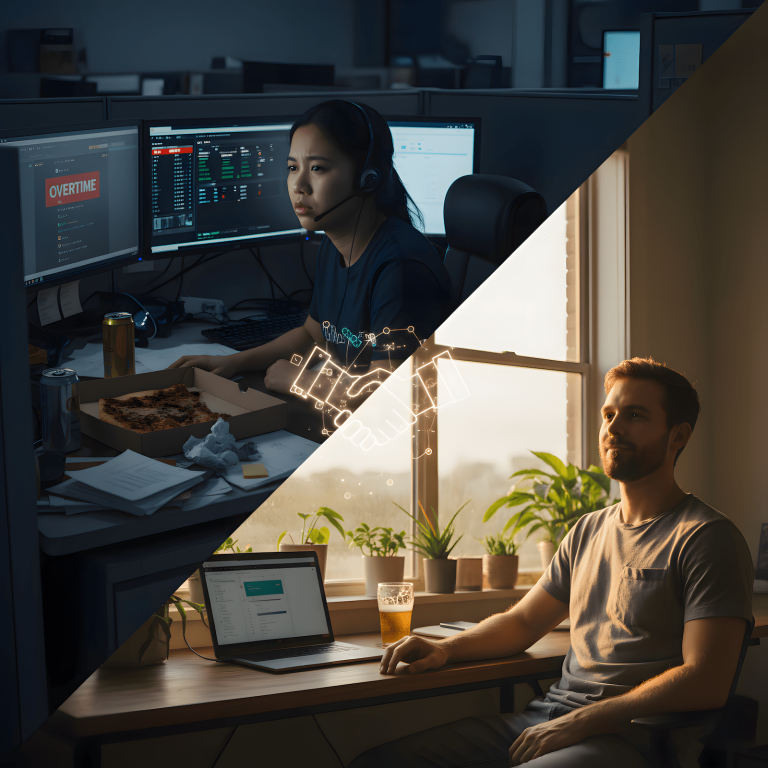
The Slack status is green. The calendar is stacked. The response time is under three minutes. And at the end of the day, nothing meaningful got done. This is the quiet reality of performative remote work, and it’s more common than anyone admits because admitting it feels like handing ammunition to every manager who wanted you back in the office in the first place.
The problem isn’t laziness. It’s that remote work removed the natural feedback loop between effort and visibility, and most workers filled that gap by optimizing for the wrong thing. They started managing perception instead of output because perception is what gets measured when nobody can see the actual work.

What the Office Actually Measured
In an office, physical presence created a proxy for productivity. Your manager could see you at your desk, hear you on a call, watch you walk to the whiteboard. None of that confirmed you were doing useful work, but it satisfied a basic managerial instinct that something was happening. Remote work removed that proxy without replacing it with anything better, and that created a vacuum that both workers and managers filled badly.
Workers filled it by broadcasting activity. More messages, faster replies, more meetings attended, more status updates pushed. Managers filled it by adding monitoring tools, mandatory check-ins, and activity tracking software that measures keystrokes and mouse movement instead of whether the project is moving. Both responses are rational given the information gap, and both make the actual work harder to do.
The result is a workplace where the highest-visibility worker gets the best performance review regardless of what they actually shipped, and where taking two focused hours away from Slack to finish something important feels professionally risky. That’s not a remote work problem. That’s a measurement problem that remote work exposed.
Why You’re Probably Playing the Game Too
I’ve done this. Juggling QA and PM work from home, there were weeks where I was visibly active every hour and privately aware that nothing had moved forward in days. The activity was real. The output wasn’t. The problem wasn’t motivation, it was that the visible layer of remote work had become its own full-time job on top of the actual work, and there wasn’t enough cognitive bandwidth left to do both properly.
Context switching is the mechanism that makes this so draining. Every Slack ping that pulls you out of a focused task costs more than the thirty seconds it takes to read it. The research on this is consistent: recovering full concentration after an interruption takes significantly longer than the interruption itself. A day of constant availability is a day of constant interruption, and constant interruption is incompatible with the kind of focused work that actually produces results. The way context switching kills momentum isn’t obvious in the moment because you feel busy the entire time.
The Measurement Problem Nobody Wants to Fix
Companies that added monitoring software after going remote didn’t solve the measurement problem. They just made the performative layer more granular. Screenshot tracking and keystroke logging measure whether someone is at their computer, not whether what they’re doing matters. Workers respond by staying at their computers longer and doing less work that requires sustained thought, because sustained thought requires not looking at the screen for long stretches.
The actual fix is output-based measurement, which requires managers to define what done looks like before work starts instead of evaluating effort after the fact. That’s harder than checking whether someone is online. It requires clarity about what matters, which requires conversations that most organizations avoid because they’re uncomfortable. It’s easier to install activity monitoring software than to answer the question of what this role is actually supposed to produce.
If your organization hasn’t had that conversation, you’re operating in the measurement vacuum where presence and output are conflated, and the rational response is to stay present and visible even when that comes at the cost of actual output. That’s not a character flaw. It’s an adaptation to a broken incentive structure. The remote work metrics that actually matter are outcome-based, not activity-based, and most teams never define them.
What Productive Remote Work Actually Looks Like
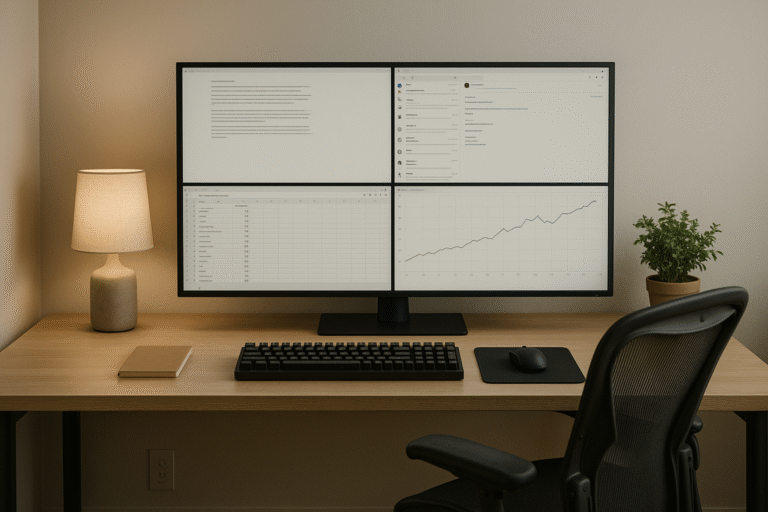
Genuinely productive remote work looks quiet from the outside. Long stretches without a Slack message. Slow email response during focused work blocks. Fewer meetings, shorter ones, clearer agendas. The output is visible at the end of the week, not minute by minute throughout it. That pattern is invisible to monitoring tools and looks like disengagement to managers who equate activity with effort.
The workers who figure this out stop managing their visibility and start managing their attention. They block time for focused work and protect it from interruption. They batch communication into defined windows instead of staying perpetually available. They define what done looks like at the start of the week and measure themselves against that instead of against how busy they felt. None of that is revolutionary. It’s just what focused work requires, and it’s incompatible with the performative layer that most remote workers maintain simultaneously.
The question worth asking at the end of each week is not whether you were responsive and visible. It’s whether the work moved. If it did, the method doesn’t matter. If it didn’t, more activity won’t fix it.