
Some links on this page are Amazon affiliate links. If you choose to buy through them, RemoteWorkHaven may earn a small commission at no extra cost to you.
These links only appear where tools or setup gear naturally fit the topic. No paid placements. No brand endorsements.
Remote work isn’t a Pinterest board. Your chair isn’t “vibes.” Your desk isn’t a lifestyle accessory. They’re gear. And when you cheap out, your body pays the price in form of migraines, posture collapse, stress fatigue.
Most workers learn this the hard way. They throw money at an “ergonomic” chair on sale or buy a table that was never meant to hold up eight hours of actual work. Then they wonder why their back aches, their shoulders cave in, and their focus crashes mid-day.
This isn’t interior design. It’s operations. And your setup is either helping you survive or setting you up to break.
The Myth of the “Good Enough” Setup
Walk into most home offices and you’ll see the same trap:
- Dining chairs moonlighting as “office seating.”
- Tables wobbling with every keystroke.
- Instagram-perfect setups where nothing actually works under pressure.
People convince themselves it’s fine because they’re saving money. But a weak setup costs more than it saves. Every hour spent in a chair that tilts wrong or a desk that sits too high is compounding stress on your spine, wrists, and focus.
That’s not aesthetics. That’s slow damage.
Posture Isn’t a Buzzword, It’s Load Management
You don’t need a chiropractor to tell you what your body already knows. Bad posture doesn’t just hurt, it compounds into migraines, eye strain, and fatigue that wipes out entire days.
When we broke down why posture collapse wrecks remote workers, it became clear that chairs and tables aren’t passive. They’re active forces shaping how you sit, breathe, and focus. Get them wrong, and you’ll pay with headaches and productivity debt.
That’s why gear matters: the wrong setup forces the wrong posture. No discipline can fix that. You can’t willpower your way out of a collapsing chair.
The Control Room Mindset
Think of your home office like a control room. In a control room, nothing is decorative. Every console, every screen, every chair has a purpose. The operator doesn’t sit on a barstool. The desk isn’t balanced on sawhorses.
Here’s the truth nobody admits: we all dream of the minimalist setup. Clean desk, single monitor, plant in the corner. I’ve even taken pictures of mine when it’s cleared — looks great for three minutes. Then reality hits: a second monitor comes online, notes pile up, cables crawl back, coffee mugs appear.
Work isn’t minimal. Operations expand. That’s why chasing “clean aesthetics” sets you up for disappointment. A control room isn’t minimalist, it’s functional. The mess isn’t failure; it’s evidence of load.
That’s the mindset shift: stop shopping for the fantasy, and start buying gear that survives reality. We already showed why your home office is a control room. Buy like it.
Matching Gear to Your Actual Load
The desk and chair you pick should match the weight of your actual workflow, not the Instagram version of it.
- Laptop-first setups – If you’re truly mobile or running light, you can get away with a smaller footprint. But “small” doesn’t mean flimsy. You still need stability, enough space for posture, and a surface that won’t wobble the moment you type.
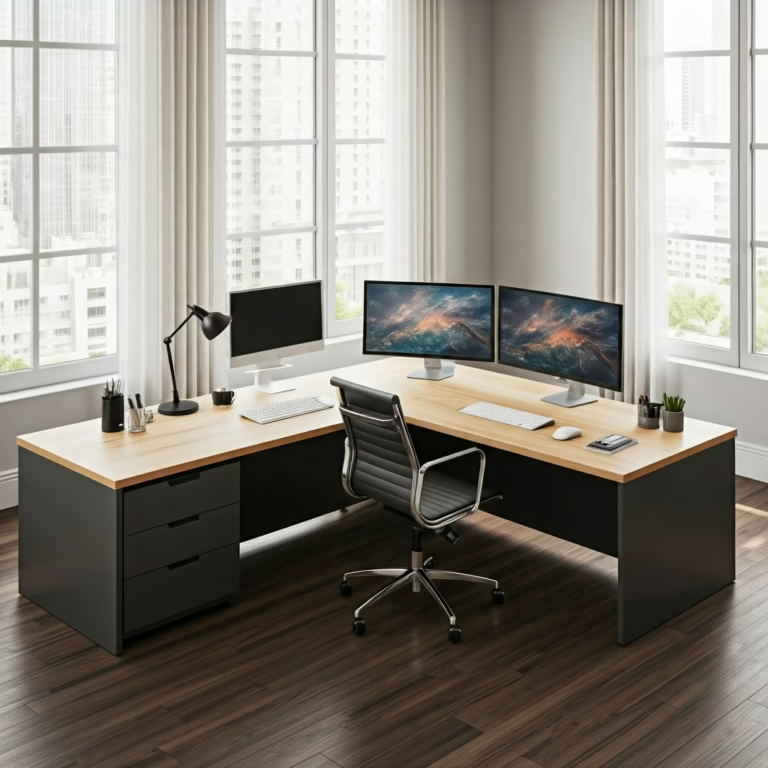
- Desktop or multi-monitor setups – Different beast entirely. Once you add dual monitors, a tower, or multiple peripherals, you’re not buying furniture you’re buying infrastructure. Your desk needs load-bearing strength, width for peripherals, and height adjustability that doesn’t compromise stability.
This is why so many home offices look like they came out of IKEA, then implode after six months. People shop for the fantasy instead of the workload.
That’s where durable, height-adjustable desk setups come in load-rated, stable, and designed for people running multi-monitor rigs, not just a laptop and coffee mug.
What Not to Buy
Marketers love throwing “ergonomic” at you. Nine times out of ten, it’s trash. Here’s what to ignore:
- The $99 miracle chair – Looks ergonomic, feels fine for 30 minutes, wrecks you in a week.
- Aesthetic desks – Pretty wood, zero stability. Meant for laptops, not actual setups.
- Instagram setups – Cable-free, plant-heavy, all style. Nobody’s coding or doing ops on those.
Don’t mistake “good photos” for “good gear.” Remote work breaks weak setups fast.
We’ve tested this in the chair showdown and the desk comparisons.
The Upgrade Path That Actually Works
If you’ve already read our earlier breakdown on chairs and tables that actually work for remote setups, you know the baseline: stability, adjustability, and durability. That’s the foundation.
But if you’re ready to stop cycling through cheap gear, you need something built for constant load.
That’s why people eventually look beyond budget furniture toward chairs built for sustained daily load.
Their desks aren’t “aesthetic furniture” they’re platforms engineered for real work. Adjustable height, load-tested, actually usable for someone who does more than email.
Cross-Load Reality: Gear and Health Are Tied
Gear isn’t separate from health. They feed into each other.
- A collapsing chair = tension headaches.
- A desk at the wrong height = wrist strain, posture collapse, and fatigue.
- A weak setup = mental drag, the opposite of what we break down in operating mindset posts.
Ignoring this costs more than gear ever will. Every day you fight your chair or table, you’re draining mental and physical reserves you don’t get back.
ROI of Getting It Right
Let’s get tactical. A $400–600 setup upgrade looks expensive. But add it up:
- One migraine day off = $200+ lost (if you freelance, more if salaried deadlines slip).
- Doctor visits and meds = ongoing cost.
- Lost productivity = compound damage.
That “expensive” chair and desk? They’re cheap compared to the bleed of weak setups. ROI isn’t about comfort. It’s about uptime.
The Discipline Factor
A strong setup doesn’t just protect your body. It enforces discipline.
When you sit in a stable chair at a stable desk, posture becomes automatic. Focus follows. You’re less likely to slump into a couch, scroll distracted, or cut corners. The environment cues you into operating mode.
That’s why the Control Room mindset matters. It’s not just about surviving eight hours. It’s about anchoring discipline into your workspace.
Closing the Loop
If you treat furniture as decor, you’ll get decor-level performance: fragile, aesthetic, short-lived. If you treat it as gear, you’ll get gear-level results: stability, resilience, ROI.
Your setup is a system. Every weak point compounds damage. Every strong point compounds focus.
Stop cycling through disposable fixes. Invest once. Build your control room.
👉 Ready to upgrade? Look at load-rated desks and task chairs built for long hours, and build a setup that doesn’t collapse under pressure.

Tester of chairs and tables • Professional sitter under load
Built RemoteWorkHaven.net after realizing most “ergonomic” gear is either overpriced décor or disposable trash. Spends more time stress-testing seats and desks than Instagram ever will.