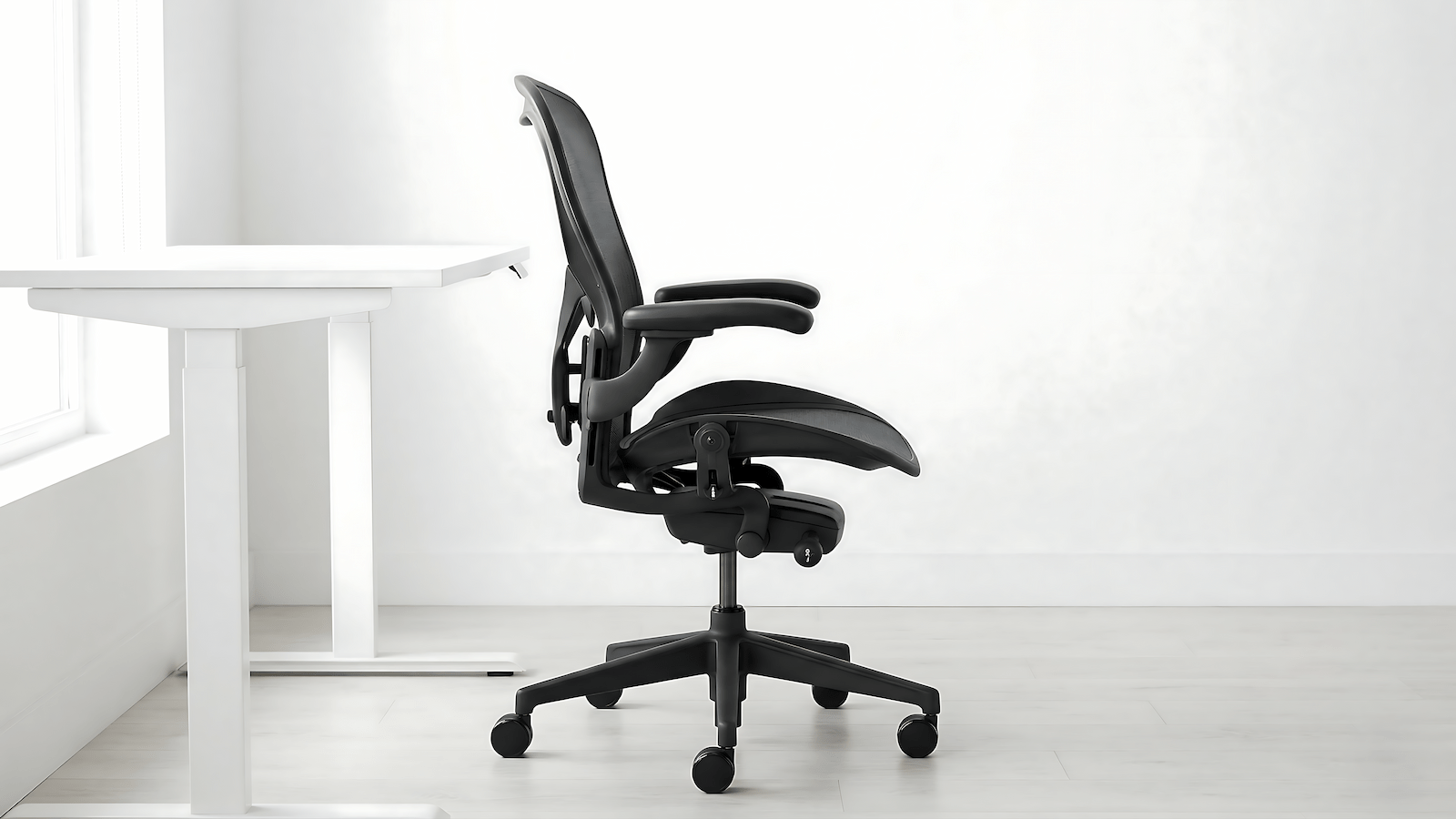
You do not need to spend four figures on a chair to get real ergonomic support, and you should not settle for a $150 chair that calls itself ergonomic without earning it. The mid-range bracket is where adjustable lumbar, seat depth control, and armrests that actually move to where your arms are actually start showing up, and this guide only covers chairs that sit in that bracket.
Herman Miller and Steelcase’s flagship chairs make excellent ergonomic cases, but they are not the only way to get real adjustability. A growing set of mid-range challengers now offers the same core adjustment logic, dynamic lumbar tracking, multi-directional armrests, seat depth control, without the premium brand markup. This guide focuses on chairs that are genuinely ergonomic, not just marketed as ergonomic. If you are building your workspace from the ground up rather than just swapping the chair, the home office setup guide for remote work covers where the chair fits within the full environment decision.
Some links on this page are Amazon affiliate links. If you choose to buy through them, RemoteWorkHaven may earn a small commission at no extra cost to you.
These links only appear where tools or setup gear naturally fit the topic. No paid placements. No brand endorsements.
Quick-Pick Comparison Table
| Pick | Product | Lumbar Support | Seat Depth | Armrests |
|---|---|---|---|---|
| Best Overall | Branch Verve Chair | Height-adjustable, V-shaped suspended back | Yes | Height-adjustable |
| Most Accessible Entry | Branch Ergonomic Chair | Height-adjustable, removable | Yes | 3D |
| Best Step-Up | Branch Ergonomic Chair Pro | Height + two-way padded cushion | Yes | 5D |
| Best Full Mesh | SIHOO Doro C300 | Dynamic, spring-loaded tracking | Yes | 3D |
| Best Commercial-Grade Brand | HON Ignition 2.0 | Height + firmness-adjustable | No | 2D |
| Best Steelcase Entry Point | Steelcase Series 1 | Integrated LiveBack, flexor system | Functional seat depth range | 4D |
| Best Adjustability for the Price | Autonomous ErgoChair Pro | Adjustable, mesh-integrated | Yes | Height and width adjustable |
What Actually Separates Mid-Range from Budget and Premium
Below the mid-range bracket, chairs are ergonomic in name only. You get height adjustment and maybe a lumbar pillow that slides out of position within a week. Above it, you are paying for premium materials, longer warranties, and brand reputation, all real, but not necessary for most home office setups where the chair sits eight hours a day rather than sixteen.
Mid-range is where functional ergonomics actually show up: adjustable lumbar that tracks your spine rather than sitting fixed, seat depth adjustment, multi-directional armrests, and tilt tension control. These are the adjustments that determine whether a chair works for your specific body or just looks the part in a product photo. Every chair on this list clears that bar.
What Ergonomic Adjustments Actually Matter
Lumbar support adjustment is the feature most buyers skip evaluating and the one that matters most. Height-adjustable lumbar is common at this tier. Depth-adjustable or dynamic lumbar, where the support tracks your spine as you shift position, is rarer and considerably more valuable. If a chair’s lumbar support only moves up and down, it may never hit the right position for your specific back curve, no matter how many other features the chair has.
Seat depth determines how much of your thigh gets supported. Sitting too far from the backrest puts pressure on the back of your knees over a long session. Sitting too close leaves your thighs unsupported and shifts weight forward onto your lower back. A 2 to 3 inch range of seat depth adjustment accommodates most body types, and it is the single feature that most separates a genuinely ergonomic mid-range chair from a budget chair wearing the label.
Armrest range matters more than armrest padding. Multi-directional armrests let you position your arms to support your shoulders, rather than forcing your shoulders to adapt to fixed arm positions that were never built for your desk height. Fixed or single-direction armrests are a meaningful ergonomic compromise for anyone sitting more than six hours a day, which describes most remote workers.
The Best Mid-Range Ergonomic Office Chairs
Best Overall: Branch Verve Chair
The Branch Verve is Branch’s current flagship and the most consistently recommended chair in the mid-range bracket across independent testing outlets, earning Editor’s Choice recognition for its blend of style and genuine ergonomic function. It uses a suspended V-shaped back frame that holds the adjustable lumbar support, paired with a 3D knit backrest that stays breathable over long sessions rather than trapping heat the way foam-backed chairs do. Six points of adjustment cover tilt, tilt lock, seat height, seat depth, armrest height, and lumbar height, which is enough range to fit most body types without needing a second chair for anyone in the household.
The build is rated for continuous 8+ hour use and supports up to 300 pounds, with a polymer frame and aluminum base that holds up under daily rolling and reclining. The main tradeoff against the step-up Pro model below is fewer total adjustment points and simpler armrests, but for most home office setups the Verve’s six points of adjustment are already more than most budget chairs offer across their entire feature set.
Most Accessible Entry: Branch Ergonomic Chair
The base Branch Ergonomic Chair is the most accessible way into the Branch lineup and still clears the mid-range ergonomic bar with room to spare. It carries BIFMA commercial-grade certification and Greenguard Gold emissions certification, which are not marketing badges, they indicate the frame, casters, and gas lift are tested to the same standards used in corporate office furniture. Seven points of adjustment include a removable, height-adjustable lumbar support and seat depth adjustment, both features that plenty of chairs priced well above this one skip entirely.
The mesh back holds its shape over time better than cheaper mesh alternatives, and the foam seat is firm rather than plush, which matters for anyone who sits for long stretches since firmer foam resists compression longer than soft foam does. It supports up to 300 pounds and fits users roughly 5’2″ to 6’2″, covering most adult body types without needing a plus-size variant.
Best Step-Up: Branch Ergonomic Chair Pro
The Branch Ergonomic Chair Pro is the meaningful upgrade within the Branch lineup for anyone who wants more precision than the base model offers. It adds 14 total adjustment points versus the base chair’s seven, upgrades to 5D armrests that add pivot and pad-position adjustability beyond simple height and width, and includes forward tilt for active sitting, a feature that matters specifically for anyone who leans into their desk during focused work rather than sitting fully upright all day.
It replaces the base model’s plastic lumbar support with a padded, two-way adjustable cushion, which is a real comfort difference over long sessions, not just a marketing upgrade. The build quality carries the same BIFMA certification and Greenguard Gold rating as the base chair, with an aluminum base underneath the added adjustment precision. For anyone sitting 8+ hours daily who has already tried a base-tier ergonomic chair and found the adjustment range limiting, this is the pick.
Best Full Mesh: SIHOO Doro C300
The SIHOO Doro C300 is the only fully mesh pick on this list, seat, back, and headrest, making it the strongest option for anyone who runs warm during long sitting sessions or works in a room without reliable air conditioning. Its standout feature is dynamic lumbar support: a spring-loaded mechanism that physically tracks your spine as you shift position rather than staying fixed in one spot. Lean forward to type and it follows. Recline and it tracks back with you, which is functionally different from the height-only lumbar adjustment most chairs at this tier offer.
This is why the chair has accumulated thousands of reviews at a consistently high average rating, it works the way people expect ergonomic support to work rather than requiring constant manual readjustment. The backrest adjusts across four positions and moves with your upper body laterally, while the 3D armrests coordinate with the backrest when reclining rather than staying locked in one position regardless of chair angle.
Best Commercial-Grade Brand: HON Ignition 2.0
HON is an established commercial office furniture brand, and the HON Ignition 2.0 is their workhorse mid-range chair, built for office environments where chairs see daily multi-shift use rather than a single person’s home office. It features a synchro-tilt mechanism, height and firmness-adjustable lumbar support, and width and height-adjustable armrests, a combination that covers the core ergonomic bases even without seat depth adjustment.
The padded foam seat and mesh back combination is durable for long hours since HON builds specifically for commercial durability standards. The main tradeoff is the lack of seat depth adjustment, which limits fit precision for users with notably shorter or longer legs than average. For anyone who wants a proven commercial brand with a long track record over a newer direct-to-consumer brand, this is the pick.
Best Steelcase Entry Point: Steelcase Series 1
The Steelcase Series 1 is Steelcase’s answer to the mid-range bracket, bringing the brand’s Integrated LiveBack technology down from its premium flagship chairs to a genuinely attainable price point. LiveBack uses a flexor system built into the backrest that changes shape to mimic your spine’s movement throughout the day, which is a more sophisticated approach than the simple recline mechanisms most mid-range chairs rely on. It includes 4D adjustable arms and a functional seat depth range of roughly 15.75 to 18 inches, giving genuine fit flexibility across different leg lengths.
The chair carries a 12-year mechanism warranty, which is unusually long for this price tier and signals Steelcase’s confidence in the build even at their most accessible price point. For anyone who wants Steelcase’s engineering reputation without paying flagship Steelcase pricing, this is the entry point that makes sense.
Best Adjustability for the Price: Autonomous ErgoChair Pro
The Autonomous ErgoChair Pro sits in the middle of Autonomous’s chair lineup and earns its spot here on adjustability alone. It includes a 5-position lockable recline, adjustable lumbar support, adjustable armrest width, and an adjustable headrest, a full set of adjustment points that plenty of pricier chairs don’t match. The mesh back and headrest padding hold up well for all-day use, and the seat height range accommodates most desk heights without needing a separate desk riser.
The tradeoffs are thinner padding on the seat and armrests compared to foam-heavy alternatives like the Branch chairs above, and it is not the best fit for notably tall users given its more compact frame. For anyone who prioritizes adjustment range over plush padding, this is the pick.
What You Give Up Below Mid-Range vs. What You Don’t Get Even at Premium
Build longevity is the main gap below this bracket. Budget chairs typically carry 1 to 2 year warranties and show visible foam compression or mesh sagging well before that window closes. Every chair on this list carries a warranty of at least several years, with the Steelcase Series 1 extending to 12 years on mechanisms, a gap that reflects real material and construction differences, not just brand markup.
What you don’t give up by staying in the mid-range bracket instead of going premium is the ergonomic adjustment range that actually protects your back, neck, and shoulders. Dynamic lumbar tracking, multi-directional armrests, and seat depth adjustment, the features that matter most for long-term sitting health, are all present somewhere in this list. The premium tier’s advantage is almost entirely in material longevity and finish quality, not in core ergonomic function you’d otherwise be missing.
If you’re rounding out the rest of your workspace rather than just the chair, the best office keyboard guide covers the other piece of all-day comfort that a good chair alone doesn’t solve.
Frequently Asked Questions
Is a mid-range ergonomic chair worth it for home office use? If you sit more than four hours a day, yes. The cumulative effect of poor posture compounds over months, and a chair that supports neutral spine positioning reduces lower back strain in a way that a standing desk or lumbar pillow alone does not.
How long should a mid-range office chair last? Most mid-range chairs are built for 5 to 8 years of daily use before foam or mesh degrades noticeably, with some, like the Steelcase Series 1, backed by mechanism warranties well beyond that window. Factor the warranty length into how you compare chairs, not just the feature list.
Can I try before I buy? Most office supply stores carry a limited floor selection. If ordering online, verify the return window before buying, since chairs are bulky to return and some retailers charge restocking fees.
What’s the minimum adjustability I should look for in a mid-range chair? Adjustable lumbar support and seat depth adjustment are the two features that separate genuinely ergonomic mid-range chairs from budget chairs wearing the label. Below that combination, the adjustability range is too limited to make a meaningful difference for anyone sitting long hours.