Productivity apps don’t fix broken systems. They give you something to configure while the actual problem gets worse. If you’ve cycled through Notion, Todoist, ClickUp, Motion, and whatever just got featured on a YouTube channel this week, and you’re still ending every week feeling like you got nothing done, the app is not the issue. The rhythm is the issue, and that’s a different problem entirely.

What Remote Work Actually Removed
The office was inefficient, annoying, and full of interruptions you didn’t ask for. It also provided passive structure that you didn’t notice until it was gone. The commute gave your brain a transition between home mode and work mode. The physical presence of other people created enough ambient accountability to stay on task. The end of the workday was marked by leaving the building, which gave your nervous system a clear signal that work was over.
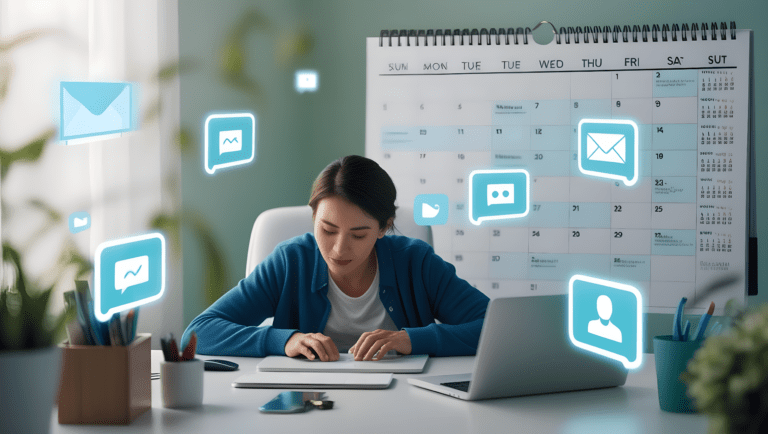
Remote work removed all of that simultaneously. What replaced it was a laptop that’s always within reach, a Slack that never fully goes quiet, and a home environment that your brain now associates with both rest and work. The boundaries that used to exist passively now have to be built deliberately, and most remote workers never got instructions for that part.
The result is a specific kind of exhaustion that’s hard to name. You’re busy all day but can’t point to what you finished. You’re technically off work but your brain is still half-in. You sleep but don’t recover. You sit down to start but spend the first hour wondering where to start. None of that is a motivation problem. It’s a missing structure problem.
Why Apps Make It Worse
A productivity app is a tool for managing tasks inside a functioning system. When the system itself is broken, adding a tool gives you the feeling of doing something without addressing the actual fault. You spend two hours setting up a new workspace in Notion. The workspace looks great. The next morning you open it, feel briefly organized, and then close it and open your email instead because the real pressure lives in your inbox, not your task manager.
This cycle repeats because the tool never replaced the missing structure. It just gave you a project to complete while avoiding the harder work of deciding when your day starts, when it ends, and what actually needs to happen between those two points. The app becomes the avoidance mechanism dressed up as productivity. You can read about why remote work system failures compound over time before adding another layer on top of a broken foundation.
What Actually Needs to Be Rebuilt
The fix is boring and that’s exactly why people avoid it. You need a defined start time that you treat the same way you’d treat a meeting you can’t skip. You need a defined end time with a physical action attached to it, like closing the laptop, putting it in a drawer, leaving the room it’s something that gives your body a signal the workday ended. You need those two things to hold for at least two weeks before you touch anything else.
After that, the only other thing that matters is deciding what three things actually need to get done today, not what forty things are theoretically on the list. Most remote workers are exhausted partly because they maintain a task list that functions as a guilt inventory rather than a daily plan. The list is never finished because it was never meant to be finished today. It’s a permanent record of everything that hasn’t been done yet, and staring at it every morning before you’ve had coffee is not a system. It’s a morale problem.
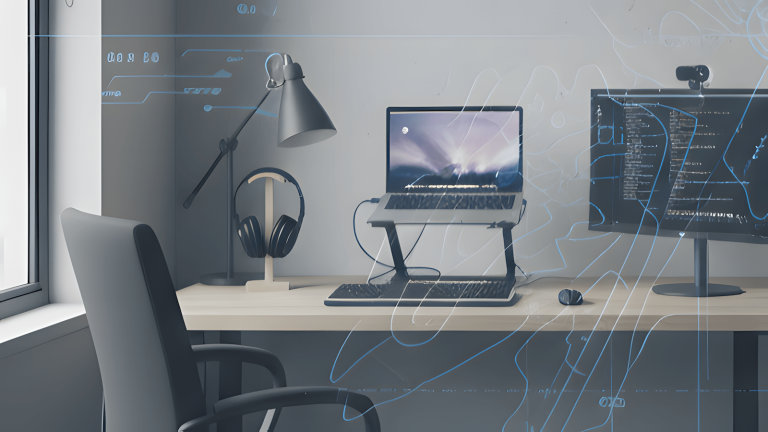
Physical environment matters more than most productivity content admits. If your desk is in your bedroom, your brain gets mixed signals about what that space is for. If you take calls from the couch, the couch stops being a place where you decompress. Context contamination is quiet and cumulative, and no app addresses it because it’s a furniture problem, not a software problem. The home office setup choices that actually affect how you work are physical, not digital.
The Part About Recovery
Burned out remote workers don’t need a better morning routine. They need actual rest, which means rest that isn’t happening in the same room as the laptop, at a time when the laptop could theoretically be opened. Rest that happens in blended mode is not rest. It’s a pause. The nervous system stays activated because the environment signals that work is still possible.
Real recovery for remote workers means physical separation from the workspace during non-work hours. It means meals that aren’t eaten in front of a screen. It means movement that happens outside the four walls you work in. None of that is a wellness sermon. It’s the minimum viable recovery loop that lets the next workday start from something above zero. Without it, every week compounds the deficit from the previous one, and no amount of task management changes that math. If the fatigue is chronic, the pattern of consistency without recovery is usually what’s driving it.
What to Actually Do
Pick a stop time today and hold it. Not because the work is done but because the workday ended. Close the laptop. Put it somewhere you won’t look at it. Do one thing that has nothing to do with work before you open it again tomorrow. Do that for five days in a row before you download anything, reorganize anything, or try a new system. If that one change makes the week feel different, you’ve found the actual problem. Build from there.