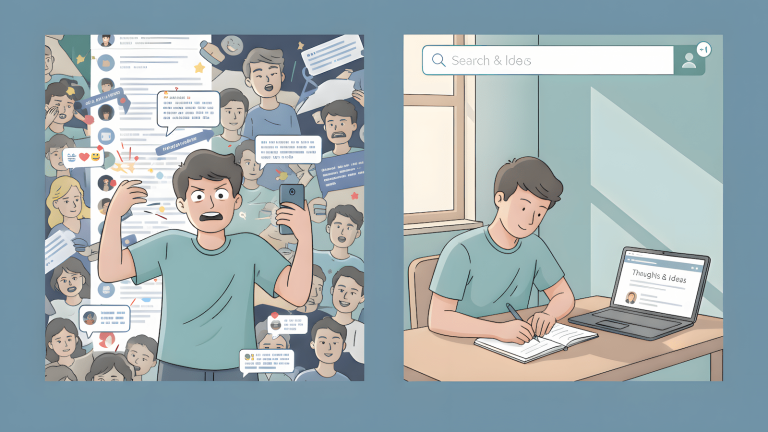
Here is what a VA or freelancer never gets to see. I send five tasks in one message, you reply “got it, on it,” and I close Slack with zero idea what you actually understood, what order you are working in, or whether anything in that list confused you. Three days later I am opening the thread again to ask why the third item never got touched, and from where I sit, that is not a minor miscommunication. That is the moment I start asking myself whether I need to track you instead of trust you.
That choice, track or trust, is the entire reason this post exists. A tracker, a time logging tool, a check in call every few hours, exists to replace the visibility that a good async reply was supposed to provide for free. Every manager running people async is making that call constantly, and the side of the spectrum most VAs never see is how directly their replies decide which way it goes. This is not a chat speed problem. You can answer within minutes and still fail this, because the failure is never response time. It is what the response actually communicates, and most replies communicate nothing I can act on.
Why One Task Dump Breaks Without a Protocol
Async work removes the live negotiation that happens automatically in a real time conversation. If I said five things to you on a call, I would naturally clarify which one matters first, or notice your confused pause on the second item, or hear you flag that the fourth task depends on something you do not have yet. None of that negotiation happens automatically in a Slack message. It only happens if you build it into the reply yourself, and from my side of the screen, I have no way to tell the difference between a VA who understood everything and one who understood nothing until the deadline arrives.
This is the part most VAs do not see because they only experience their own half of it. I did not write five separate messages with five separate response windows. I wrote one message and moved on to three other things, which means your single reply is doing the job an entire back and forth conversation would normally do. If that reply is “ok,” I have no idea what you understood, what order you are working in, or whether anything raised a question for you. The silence that follows gets read on my end as either confusion or disengagement, and I genuinely cannot tell which. Neither read survives repeatedly on a retainer, and neither read is something a tracker fixes. A tracker just tells me you were active. It does not tell me you understood the assignment.
The operational reality here is blunt. Operating without followers or oversight runs on the same logic whether you are the one running the operation or the one a few steps removed from it inside someone else’s. Nobody is watching in real time, which means the burden of visibility shifts entirely onto what gets communicated proactively, by whoever is actually doing the work.
The Acknowledgment Reply That Actually Works
A working acknowledgment reply to a multi item task list does four things in one message, and I can tell within the first reply whether a VA has internalized this or not. It confirms the count and scope of what was understood, so I can immediately catch if something got missed or misread before work starts on the wrong version of it. It flags anything ambiguous up front, rather than guessing and making me discover the wrong guess later. It states a working order, so I know what is happening first without having to ask. It gives a checkpoint, a real point at which I will hear something concrete, not a vague promise to get to it.
Compare that against the single word reply. “Noted” confirms receipt and nothing else. From where I sit, it leaves five separate unknowns hanging: whether the scope was understood correctly, whether anything needs clarification, what order things are happening in, when I should expect an update, and whether the silence that follows means progress or a stall. Every one of those unknowns is a reason I send a follow up message, and every follow up message I have to send is me doing work that your acknowledgment reply should have already done for me. I notice that. I remember it the next time I am deciding who gets the next batch of work.
This is not about writing a longer reply for its own sake. A four task list does not need four paragraphs. It needs one tight message that closes the four gaps above, even if each one only gets a sentence.
Sequencing Tasks the Client Didn’t Prioritize
Most task dumps arrive as an unordered list, which means the sequencing decision falls on whoever receives it. A lot of VAs default to chronological order, doing whatever is listed first, because it feels like the neutral choice. From my side, it is not neutral. It is a guess, and I can usually tell when it happened, because the urgent item sits untouched in third place behind two low stakes items that happened to be typed first. I did not ask for that order. Nobody asked for it. It is just what filled the silence where a real sequencing decision should have been.
The better sequencing logic runs on three signals. Dependency comes first: if one task blocks another, the blocking task moves to the front regardless of where it sits in the list. Urgency signals come second: language like “before Friday” or “client meeting tomorrow” inside the task description overrides list position every time, and missing that signal tells me you read the list without reading what was actually in it. Pattern recognition comes third, and this one only develops with time on a specific account: if I have followed up early on a particular type of task before, I am telling you, through behavior rather than words, what I actually care about getting done first. A VA who catches that pattern stops needing to be told twice.
The harder judgment call is knowing when sequencing ambiguity is worth a clarifying question versus when asking is itself a delay I did not ask for. A genuine ambiguity, where two tasks could both reasonably be read as the priority and getting it wrong wastes real time, is worth one short question, and I would rather get that question than a wrong guess. A preference that could go either way without meaningful cost either direction is not worth asking about. Asking too often trains me to think every task needs a negotiation before it starts, which defeats the entire point of working with someone asynchronously in the first place.
Reporting Progress Without Being Asked
The proactive update is the single highest leverage habit in async task management, and it is also the one most VAs skip because nothing forces them to do it. I am not going to email mid task asking for a status, not because I do not care, but because asking is exactly the behavior that turns into a tracker if I have to do it every time. The absence of that nudge from me is the test. A proactive update is the only signal I get that work is actually happening between the acknowledgment and the delivery, and whether that signal shows up unprompted is what tells me whether I can leave this account alone or need to start watching it more closely.
A partial completion update does not need to wait until everything on the list is done. “Two of the five are finished and linked below, the third is in progress and on track for the checkpoint, the last two haven’t started yet” tells me everything I need to know in one line, and it preempts the exact question I would otherwise send halfway through the timeline. This single habit is often the entire difference between a VA I check in on anxiously every other day and one I leave alone for a week at a time because I trust the channel will tell me what I need to know without me asking for it.
The mechanics behind why remote workers get mistaken for being unproductive when they are actually working steadily apply directly here. Visibility into actual work, not visible busyness, is what async trust is built on, and from my seat, a scheduled or trigger based update is the cheapest thing a VA can do to earn the kind of trust that keeps a tracker off the table entirely.
When the Client’s Tool Isn’t Your Choice
You rarely pick your own task management stack. I already run Trello, or ClickUp, or Asana, or I simply drop everything into a Slack thread or a plain email with no structure at all, and the etiquette obligations above apply regardless of which one it is. The acknowledgment, the sequencing logic, and the proactive update are not features of a tool. They are a discipline layered on top of whatever I happen to be using on my end.
Where the tool actually matters is in how much structure it gives you for free. A board based tool like ClickUp or Asana visually separates tasks and lets you mark progress in a way I can see without you writing it out, which reduces how much of the acknowledgment work needs to happen in prose. A raw Slack message or an unstructured email gives you nothing for free on my end either, which means the written acknowledgment is doing all of the structural work the tool is not providing for either of us.
This is also where AI assisted triage earns its place, specifically on the unstructured end of that spectrum. A dense five item paragraph buried inside a longer email from me is exactly the kind of input an AI tool can quickly turn into a clean, numbered working list on your end, and the same tool can help draft the first pass of an acknowledgment reply that hits all four required elements before you tighten it yourself. The leverage here is the same logic covered in the case for using AI to manage multiple operations without a team: the tool compresses the mechanical part of the work so the judgment part, deciding sequence and flagging real ambiguity, gets the attention it actually needs from you, not from the tool.
What This Protocol Actually Protects
None of this is about looking responsive to me. It is about removing the reasons I have to wonder what is happening on my account between the moment I send a task list and the moment work comes back finished. Speed alone does not buy that. A fast, empty acknowledgment followed by silence creates the same uncertainty on my end as a slow one, because I still do not know what is going on in between.
What actually protects the relationship is the boring, repeatable discipline of closing the loop every time: confirm what was understood, flag what needs flagging, state the order, report before being asked. A VA who does this is a VA I stop checking on. That is the entire trade. Every clarification I do not have to ask for, every status update I do not have to chase, is a reason I never reach for the tracker. The VAs who get more work, longer retainers, and less oversight are not the ones who work the fastest. They are the ones who never give me a reason to wonder, and that is a skill, not a personality trait, which means it can be built on purpose starting with the next task dump that lands in your inbox.