Updated: February 13, 2026
Refined for structural clarity, integrated system-based strategy, and aligned with cross-blog mesh framework.
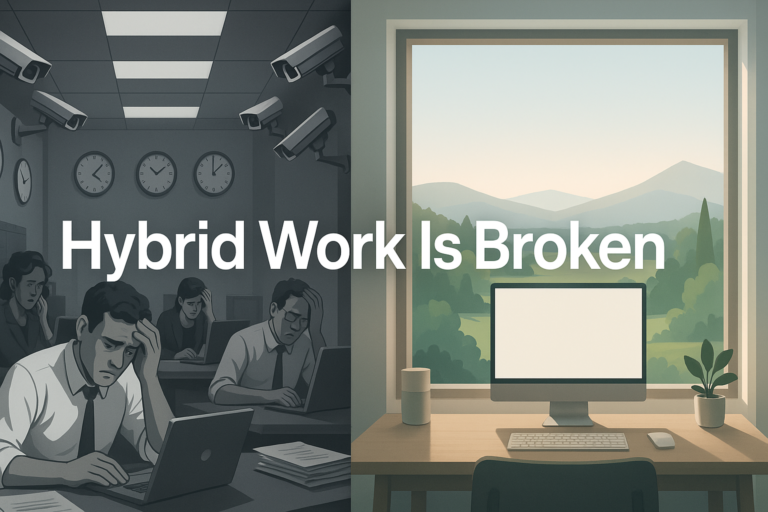
The hybrid work model sounds like the perfect compromise. A few days at home. A few days in the office. Flexibility without isolation. Structure without micromanagement.
In reality, hybrid work introduces a new category of pressure: environmental fragmentation.
You are not just managing tasks. You are managing context shifts, workspace differences, commuting friction, social expectations, and cognitive switching costs sometimes within the same week. If you do not build systems around it, hybrid work quietly erodes focus.
Hybrid Is Not Remote Work
Hybrid is not a lighter version of remote work.
Remote work allows you to optimize one environment. Hybrid forces you to operate across two.
Each environment carries different:
- Noise floors
- Social interruptions
- Meeting density
- Energy drain
- Sleep patterns
- Physical setup
If you’ve felt sharp at home but strangely drained in the office, that isn’t weakness. It’s unmanaged context switching.
The cognitive impact mirrors what’s explained in Context Switching Kills Momentum. Every shift taxes working memory. Hybrid multiplies those shifts.
Environmental Stability Beats Flexibility
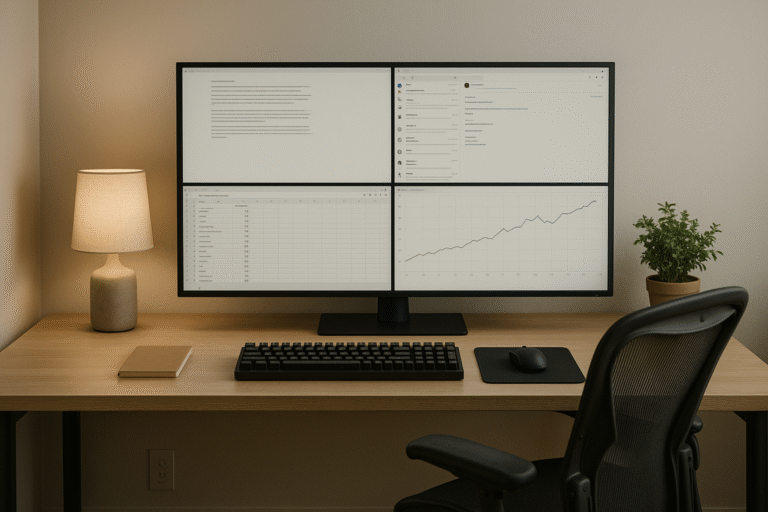
Most people try to “be flexible.” Hybrid doesn’t reward flexibility. It rewards environmental consistency inside variability. Your home setup must be production-grade. Not temporary. Not casual. If your workspace still feels improvised, revisit the structural mindset behind Your Home Office Is a Control Room. Hybrid workers especially cannot afford unstable setups.
Likewise, office days shouldn’t be random meeting marathons. They should be categorized:
- Collaboration days
- Visibility days
- Strategic alignment days
Without categorization, hybrid becomes scattered execution.
Discipline Across Two Environments
Hybrid gives perceived freedom. Perceived freedom destroys weak systems.
Without guardrails, hybrid schedules degrade into:
- Late-night catch-ups
- Reactive calendar chaos
- Commute spillover stress
- Work bleeding into personal time
The deeper structural breakdown is covered in Remote Work Discipline and Job Security, but hybrid requires dual-environment discipline:
Home discipline protects deep work.
Office discipline protects energy and boundaries.
If those aren’t clearly defined, output declines in both places.
The Hidden Cost: Mental Load
Hybrid increases mental routing.
You switch between:
- Solo and collaborative modes
- Deep focus and interruption cycles
- Controlled environment and social environment
This echoes the strain outlined in PM Mental Load and the structural imbalance discussed in Work-Life Operating System. When your brain becomes a routing hub instead of a processor, fatigue compounds.
Hybrid success requires switching buffers:
- Decompression after commute
- Protected transition blocks
- Defined shutdown rituals per environment
Without buffers, friction carries forward.
Hybrid and Physical Degradation
Hybrid fatigue isn’t only cognitive. Alternating chairs, lighting, monitor height, and desk posture creates physical stress accumulation.
Common symptoms include:
- Migraines
- Posture collapse
- Eye strain
- Sleep disruption
The patterns align with the realities covered in Remote Work Health: Migraines, Posture & Eyestrain and the compounding effects explained in Sleep Debt and Wellness. Hybrid requires ergonomic parity. If your home setup is weaker than your office setup, your body absorbs the difference.
Communication Drift in Hybrid Teams
Hybrid teams fracture quietly. Remote members feel sidelined. In-office members dominate flow. Decisions happen in physical rooms that don’t translate digitally.
To prevent erosion:
- Default to documentation
- Capture decisions formally
- Avoid hallway-only alignment
Small communication violations compound — the same dynamic explored in Counterflow Problem: Small Violations Become Systemic Rot.
Hybrid environments expose weak systems quickly.
Designing a Structured Hybrid Week
Hybrid weeks should not be improvised.
A functional rhythm looks like:
Office Days
- Collaboration
- Strategy
- Relationship building
Home Days
- Deep execution
- Planning
- System building
If you reverse those roles, you sabotage both environments.
Hybrid is structured alternation, not randomness.
Avoid Productivity Theater
Hybrid workers often overcompensate. They try to look productive in-office and overperform at home.
That leads directly into the illusion dissected in The Productivity Lie: Why Doing More Is Slowing You Down.
Hybrid success is measured by sustained output — not visible busyness.
Final Position
Hybrid work is not lighter.
It is layered.
It demands:
- Environmental stability
- Switching buffers
- Physical parity
- Communication structure
- Discipline architecture
Approach it casually, and it drains you.
Approach it architecturally, and it becomes leverage.
Hybrid is not about flexibility.
It is about system integrity across environments.

WFH Survival Architect • Licensed Procrastination Consultant
Writes about remote work systems the way they actually behave under pressure. Hybrid setups, discipline failures, environmental friction not theory, but operational reality. Built RemoteWorkHaven.net for remote workers who want structural clarity instead of productivity theater.