Some links on this page are Amazon affiliate links. If you choose to buy through them, RemoteWorkHaven may earn a small commission at no extra cost to you.
These links only appear where tools or setup gear naturally fit the topic. No paid placements. No brand endorsements.
Remote workers eventually face the same quiet pressure. Income feels stable until it suddenly is not. Contracts change, clients disappear, or companies start tightening budgets. That is usually when the search for alternative income begins, not out of hype but out of self-preservation. People are not looking for fantasy money machines, they are looking for something they can realistically control from home.
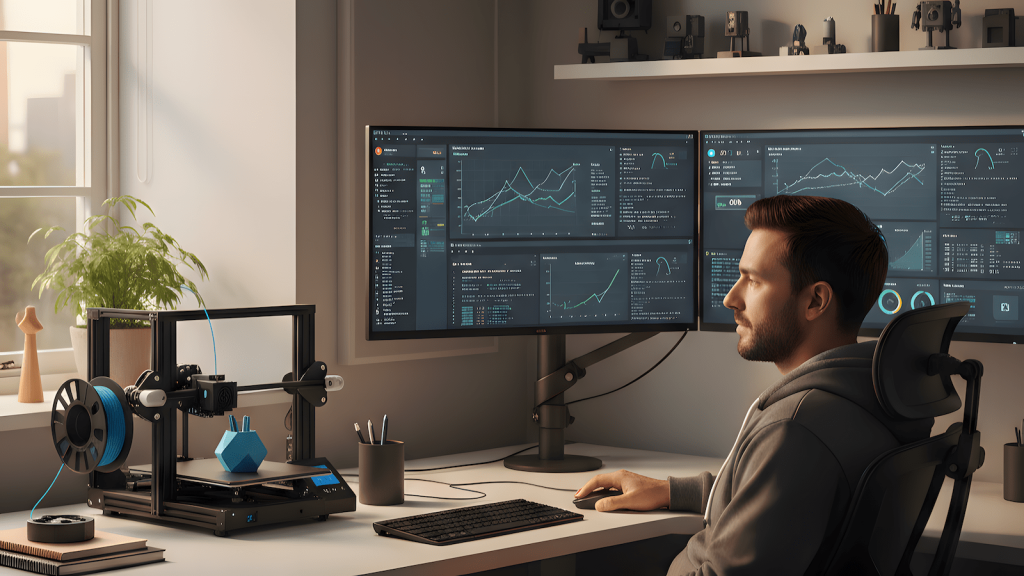
3D printing keeps entering that conversation for a reason. It looks like a contained system that fits naturally into a home office setup. You buy a machine, produce small physical products, and potentially create a side income stream that does not depend on another employer. On paper, it sounds cleaner than juggling freelance platforms or chasing content algorithms. In practice, the outcome depends heavily on how you approach it.
Yes, people make money with 3D printing. Many others end up with an expensive plastic hobby collecting dust. The difference usually comes down to whether the operator treats it like a business experiment or a gadget purchase.
Why Remote Workers Are Exploring Physical Side Income
If you have been in the remote space long enough, you already know income stability is never guaranteed. Even experienced professionals run into slow months, delayed payments, or sudden project cuts. The reality discussed in this breakdown of how blogs generate income without massive audiences highlights the same underlying principle. Sustainable income usually comes from systems that solve real demand, not from visibility alone.
That same logic applies to physical products. Remote workers who are already building digital income streams often start looking for complementary channels that are less platform dependent. A small print operation feels attractive because it converts effort directly into inventory. You are not waiting for an algorithm to notice you. You are producing something tangible that can be listed and sold.
However, physical products introduce their own form of discipline. The machine does not remove the need for product market fit. It just changes the battlefield.
What Actually Sells in the 3D Printing Space
The biggest early mistake is printing what looks impressive instead of what people are actively searching for. Social feeds are full of detailed character statues and flashy prints, but consistent sellers usually focus on practical items first. Functional products solve everyday friction, which gives them steady demand even without viral exposure.
Common performers include cable organizers, controller stands, headset mounts, and small desk utilities. These products work because buyers already feel the pain point before they ever see your listing. Remote workers understand this dynamic well because their entire day revolves around optimizing their workspace. Small physical improvements to a desk environment often have clearer value than decorative pieces.
Gaming accessories and workspace add-ons also perform reasonably well when positioned correctly. They sit between pure utility and enthusiast appeal, which gives them broader reach. The key is still the same. If the product does not solve a clear problem or improve a daily setup, sales tend to stall after the initial curiosity wave.
Character memorabilia is where many beginners get distracted. Demand exists, but so does platform risk. Intellectual property complaints can wipe listings or entire shops if you are not careful. For someone testing alternative income, safer product categories usually provide a more stable runway.
Startup Cost and Break Even Reality
The entry cost for a basic home printing setup is relatively accessible, but it is not trivial either. A reliable beginner printer, a few spools of filament, and basic tools typically land in the low hundreds of dollars. That is manageable for many remote workers, but it is still capital that needs to earn its way back.
What matters more than the printer price is the time math behind each product. Filament is cheap, which makes margins look attractive at first glance. The hidden constraint is print duration. If a single item ties up your machine for most of the day and only sells at a low margin, the economics quickly become uncomfortable.
From experience, people who succeed early pay close attention to throughput. They look at how long each product occupies the machine and whether the selling price justifies that time. Remote professionals who already think in workflows usually adapt faster because the mindset is familiar. The printer becomes another production system that needs to earn its keep.
The Operational Reality Most People Discover Late
Even at small scale, running a print setup introduces real overhead. Failed prints happen, especially during the early learning phase. Quality checks, packaging, and shipping also consume time that many beginners fail to factor into their expectations. This is not passive income in the beginning. It is light manufacturing with a learning curve.
There is also the question of product selection discipline. Many hobbyists produce visually impressive items that attract compliments but generate very few sales. The pattern is similar to what happens in affiliate marketing when people promote products without understanding buyer intent. The trap is explained clearly in this look at where affiliate strategies often go wrong. Attention without aligned demand rarely converts.
The same rule applies to physical products. If nobody is searching for the item, your printer is just producing inventory that sits.
How This Fits Into a Broader Remote Income Strategy
3D printing works best when viewed as one layer of income diversification, not a standalone rescue plan. Remote workers who already build digital assets tend to integrate it more effectively because they understand compounding systems. A small product line can complement blogging, affiliate revenue, or freelance work without depending entirely on one source.
This is also why expectation management matters. The goal is usually not overnight replacement income. The goal is controlled, incremental revenue that reduces dependence on a single paycheck. When approached this way, even modest monthly sales can meaningfully improve financial resilience.
The people who struggle most are usually chasing fast wins. The ones who last treat the printer like production equipment and let demand data guide what they make next.
When It Makes Sense to Test This Path
This side income model tends to work best if your current remote setup is already stable and structured. You need enough consistency in your daily routine to manage occasional print failures and order handling without disrupting your primary work. It also helps if you are comfortable adjusting hardware settings when something behaves unpredictably.
If your current workflow is already overloaded, adding a printer may create more friction than income in the short term. However, if you have a controlled workspace and a systems mindset, it can become a practical experiment in income diversification. The key is to start small, validate demand early, and avoid overcommitting before the numbers prove themselves.
The Bottom Line
You can make money with a 3D printer from home, but only if you approach it with the same discipline you would apply to any remote income system. The machine itself is not the advantage. Product selection, pricing, and throughput management are what determine whether the operation survives past the hobby phase.
If you are evaluating this as an alternative income stream, treat the first few months as a controlled test. Focus on useful products, watch your time economics closely, and let real demand guide expansion decisions. That approach filters out most of the expensive mistakes beginners make.
If you want to explore beginner friendly machines and compare current options or a more advanced 3D printers.
Start small, stay honest with the numbers, and scale only when the system proves it can carry its own weight.