How Unreliable Compensation Breaks Output, Trust, and Retention
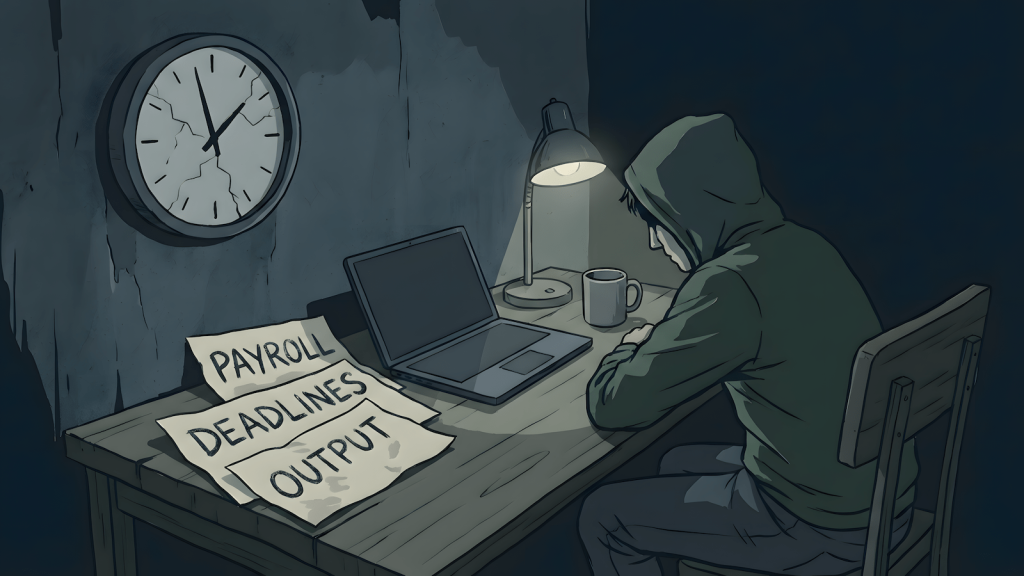
People do not slow down because they suddenly became lazy. They slow down because the contract stopped holding.
When output drops, leadership usually looks for soft explanations. Motivation. Engagement. Burnout. Attitude. Culture. These explanations are convenient because they move the problem into people instead of into the system that employs them.
Pay is not just compensation. It is the stabilizing force that allows everything else to function. When it is reliable, people absorb friction. When it is not, friction multiplies. That is when performance begins to decay, quietly at first.
Employment Is a Trade, Not a Favor
Most people do not apply for jobs to make friends. They do not apply to be treated like family. They apply because employment is a trade. Labor in exchange for predictable pay.
Good culture is a bonus. Good management is a bonus. Interesting work is a bonus. Bonuses do not matter when the base fails.
When pay adequately covers time, effort, and stress, people tolerate more than they should. Politics become background noise. Inefficiencies get worked around. Even bad decisions are compensated for with patience. Once pay becomes unreliable, tolerance collapses. Not emotionally, but structurally.
This Is Not a Remote Work Problem
Remote work only makes the failure easier to see.
The same pattern appears in offices, on factory floors, in creative roles, in contract work, and in content-driven industries. It affects salaried employees, hourly workers, and creators alike. The role changes. The mechanism does not. What matters is reliability.
Life Is Built Around Pay Timing
Most people build their lives around their pay grade. That is not irresponsibility. That is planning.
Income is divided every month into real obligations:
- bills
- utilities
- food
- transportation
- debt
- a small discretionary buffer
- savings or an emergency fund, if possible
That structure assumes one thing. Timing.
When pay arrives on time, the structure holds. When pay is delayed, everything destabilizes at once. Bills do not pause because payroll did. Utilities do not wait. Loans may empathize, then apply penalties anyway.
A delay does not affect one expense. It forces tradeoffs across the entire month. Savings are drained first. Emergency buffers disappear next. Discretionary spending goes, then essentials are squeezed. This is why delayed pay is often worse than low pay. Low pay still allows planning. Delayed pay destroys predictability.
The Pattern Is What Breaks People
The length of the delay is not the real issue. The pattern is.
A few hours can be tolerated. A few days cause stress but remain survivable. Even a long delay can be endured once. What breaks people is repetition combined with randomness.
When delays become habitual and unpredictable, planning collapses. Trust erodes. Output follows. That sequence is not emotional. It is mechanical.
What Happens to Performance
When financial reliability disappears, people do not stop caring. They stop investing surplus effort.
The brain shifts into conservation mode. Decisions slow. Initiative fades. Risk disappears. This is not laziness. It is self-protection.
High Performers Feel It First
Sometimes the change is most visible in the strongest contributors. A developer who once shipped relentlessly. Clean pull requests. Consistent commits. Dozens of tickets closed weekly. Hard problems handled without drama.
When pay is stable, that performance compounds. Momentum builds. When pay becomes unreliable, skill does not disappear. What disappears is discretionary effort. They still show up. They still work. But the surplus is gone.
Over time, output flattens. Then declines. Not because ability changed, but because the system stopped honoring the trade.
Why This Gets Misread
Slower delivery gets labeled a motivation issue. Silence gets labeled disengagement. Fewer ideas get labeled apathy. What is actually happening is trust erosion.
Trust is not built by reassurance. It is built by consistency. Nothing breaks consistency faster than unreliable pay. High performers understand opportunity cost. They do not quit immediately. They disengage internally first. By the time attrition appears, the damage is already done.
Why People Stay Anyway
Many people do not leave because they do not know where to go.
When hiring slows, openings dry up. Filters harden. Gaps get punished. Performance labels stick longer than they should. People get trapped between a bad present and an uncertain exit.
This creates artificial retention. Not loyalty. Not commitment. Containment.
People stay because leaving feels riskier than enduring. They reduce visibility. They avoid conflict. They stop taking risks. From the outside, it looks like compliance. From the inside, it is withdrawal.
The Trap That Forms
Pay instability reduces output. Reduced output becomes a performance label. Performance labels limit mobility. Limited mobility traps people longer.
This loop does not require malice. It only requires denial. Trapped workers do not revolt. They shrink. Presence remains. Contribution fades.
The Most Expensive Misread
Organizations confuse trapped employees with retained employees. Silence is mistaken for acceptance. Presence is mistaken for commitment. Low attrition is mistaken for stability.
What it actually means is people are waiting. When a safer exit appears, they do not negotiate. They do not argue. They leave cleanly. Sometimes all at once.
The Contract Is Already Broken
Employment is not charity. It is not volunteer work. It is not an internship. It is not an experiment. It is a contract.
When reliability is broken, the contract is already failing, regardless of how polite the explanations sound.
The Real Warning Sign
Resignations are not the warning sign. They are the postmortem.
The warning sign is slowed output from people who used to move fast. Quiet compliance replacing problem solving. Capable teams doing just enough to get by.
By the time people leave, the system already told you the truth.
When pay works, people work.
When pay fails, everything else follows.
This is what happens when you’re working while depleted when you’re expected to perform under conditions that aren’t acknowledged.

WFH Survival Architect • Licensed Procrastination Consultant
Writes from the fault line between real work and broken systems. Focused on why output collapses long before people quit, and why most “motivation problems” are actually structural failures.
Built RemoteWorkHaven.net for people who need their work setup, pay, and mental load to actually hold under pressure not just look good in a company handbook.