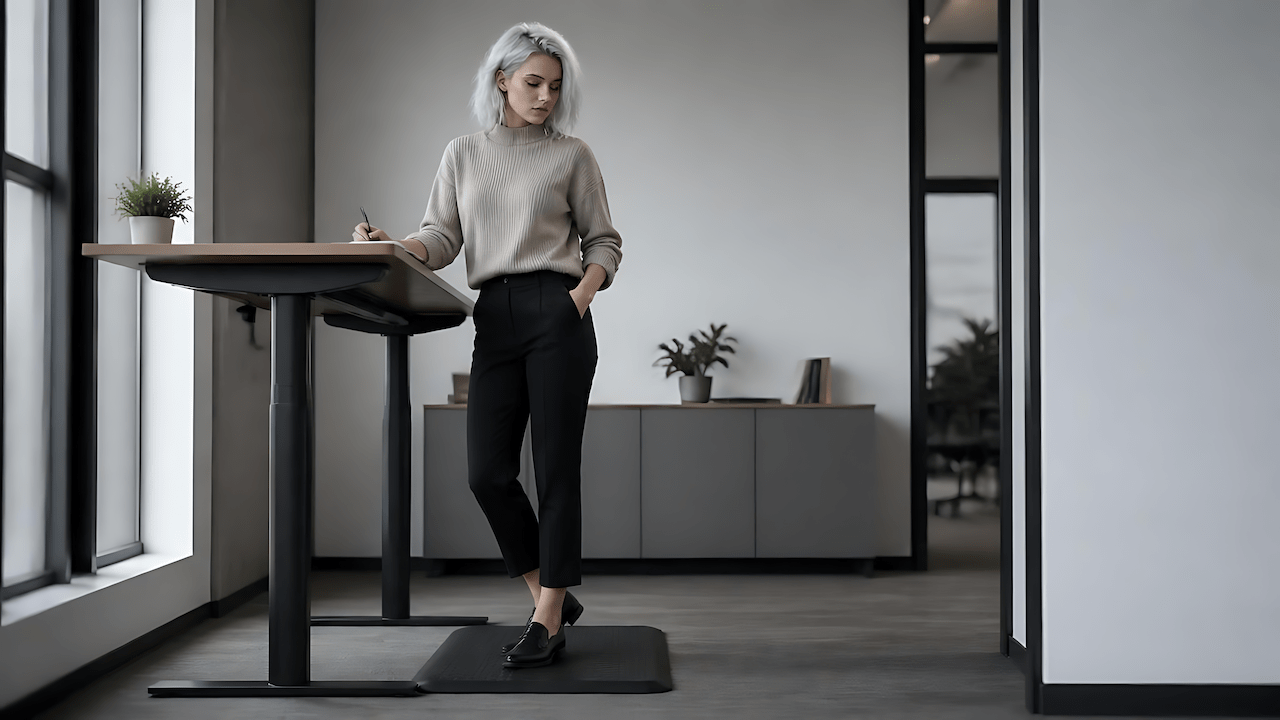
Most people buy a standing desk, use it standing for the first two weeks, then quietly stop. Not because the desk failed. Because their feet and lower back started aching by mid-afternoon and nobody warned them that the desk alone doesn’t solve that. The standing mat is the part that decides whether the desk becomes a habit or an expensive shelf you occasionally raise out of guilt.
Note on terminology before we go further: this is a floor mat, the thing under your feet when you’re standing. It’s a completely different product from a desk pad, the thing under your keyboard and mouse on top of the desk. If you came here after reading about desk pads, this is not that. Different problem, different body part, different fix.
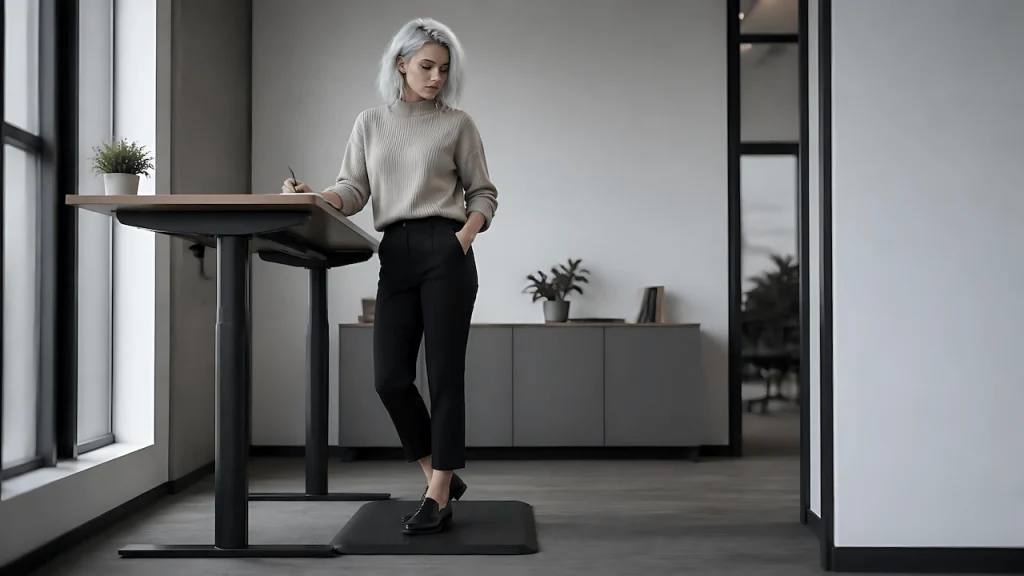
Why This Isn’t Just About Comfort
Standing at a desk with no cushioning underneath does the same thing to your legs and lower back that standing on concrete for hours does: it forces your body into micro-corrections to manage the fatigue, and those corrections pull attention away from whatever you’re actually working on. That’s the real cost. Not sore feet as an abstract complaint, sore feet as a constant low-grade distraction competing with your focus for the same afternoon that already has a deadline in it.
The fix isn’t willpower. It’s removing the reason your body keeps interrupting you.
Some links on this page are Amazon affiliate links. If you choose to buy through them, RemoteWorkHaven may earn a small commission at no extra cost to you.
These links only appear where tools or setup gear naturally fit the topic. No paid placements. No brand endorsements.
The Alternatives, by What You’re Actually Optimizing For
If you’re serious about actually alternating between sitting and standing all day, the Ergodriven Topo is the pick. Its varied terrain (raised edges, sloped zones) keeps your feet shifting position naturally instead of locking into one spot, which is what makes a multi-hour standing stretch tolerable instead of something you cut short.
If you want the most balanced, no-surprises option, the Vari ActiveMat is the safer default. Curved edges for stretching, raised side panels, straightforward flat design that doesn’t ask you to relearn how to stand.
If you’re not ready to spend on the premium tier, the FlexiSpot Anti-Fatigue Mat covers the basics well at a fraction of the price. It won’t encourage movement the way the topography mats do, but it solves the core problem: something other than bare floor under your feet.
If you want something closer to the Topo’s movement-encouraging design at a different price point, the Cubefit TerraMat is the alternative worth comparing before you commit to the Topo specifically.
What Actually Matters If You’re Alternating, Not Just Standing
Most standing mat reviews test for one thing: how comfortable is this to stand on. That’s only half the question if your actual plan is to alternate between sitting and standing through the day, not stand permanently.
Size relative to your desk footprint. A mat that’s too large gets in the way of your chair when you sit back down. Measure the clearance under your desk before buying, not after.
How easily it slides in and out. If pulling the mat out and pushing it back under the desk is annoying, you’ll stop doing it within a week and the mat becomes a permanent floor fixture whether you’re standing or not, which defeats the actual point.
Thickness versus stability. Thicker isn’t automatically better. Past a certain point, extra cushioning starts to feel unstable underfoot, which undercuts the whole reason you’re standing on it instead of the bare floor.
Comparison Table
| Pick | Best For | Honest Assessment |
|---|---|---|
| Ergodriven Topo | Serious sit-stand alternators | Premium price, but the terrain design is what makes long stretches tolerable |
| Vari ActiveMat | Balanced, no-surprises default | Safest pick if you don’t want to think about it further |
| FlexiSpot Anti-Fatigue Mat | Budget-conscious buyers | Covers the basics, skip if you want the movement-encouraging terrain |
| Cubefit TerraMat | Topo-style alternative | Worth comparing against the Ergodriven before committing to either |
The Actual Decision
A standing desk without a standing mat is a bet against your own feet, and your feet usually win within a month. Pick based on whether you’re actually planning to alternate through the day or mostly stand still: alternators want the terrain mats, everyone else is fine with something flatter and cheaper.