Most people assume the business starts with buying the machine. It does not.
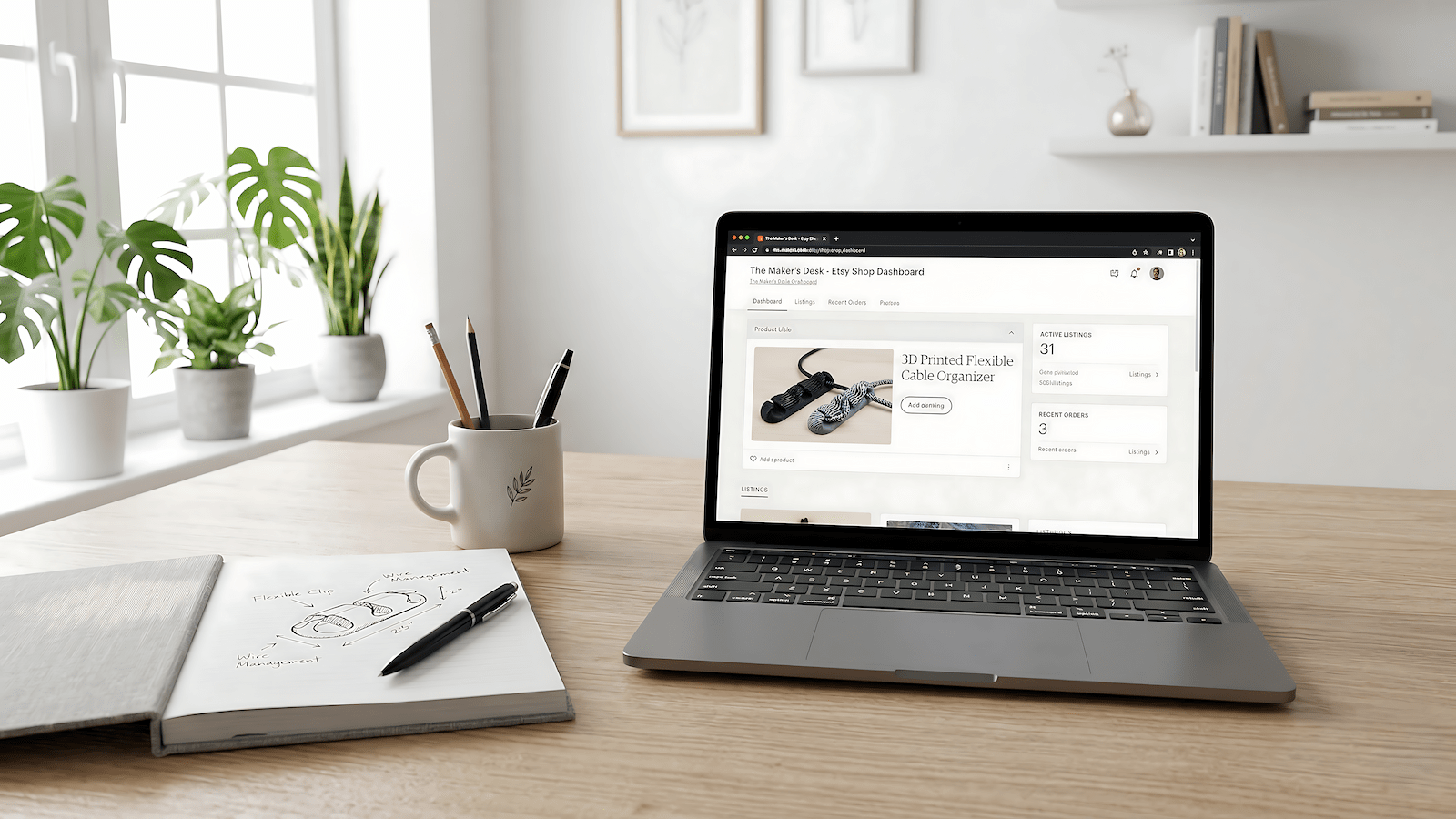
There is a model where you design the product, list it on Etsy, and a facility somewhere in the US or Europe prints it and ships it directly to your customer. You never touch the hardware. You never buy filament. You never deal with a failed print at 2am.
It is called 3D print-on-demand, and most people building 3D printing side hustles have never heard of it.
This post breaks down how it works, who it is for, and how to set it up without spending money before your first sale.
If you want the version where you do own a printer and run the operation yourself, that full setup guide is here: The 3D Printing Side Hustle Nobody Sets Up Correctly. And if you are still deciding whether any of this is worth pursuing, start here first: Can You Make Money With a 3D Printer From Home?
This post is for people who are ready to move.
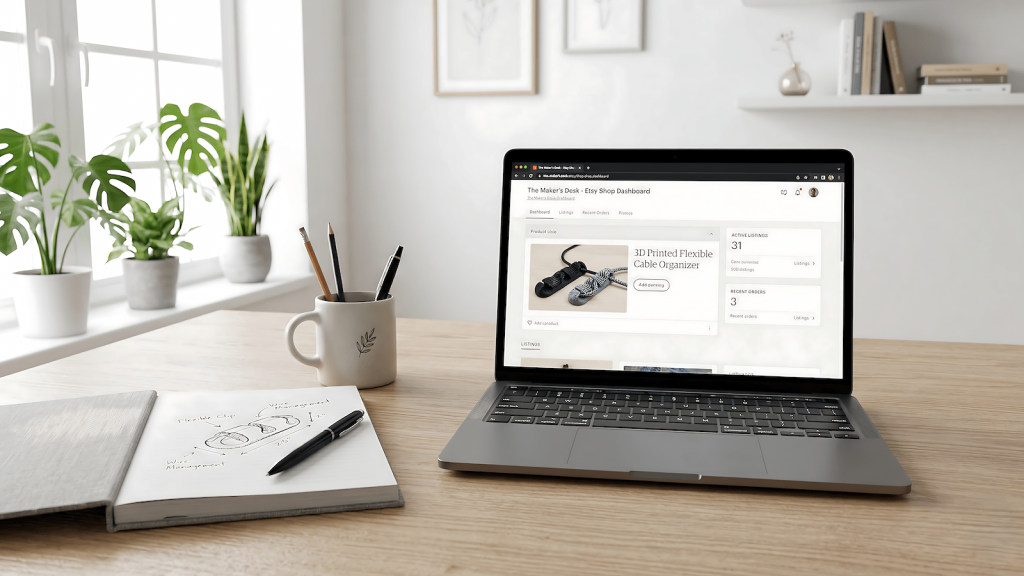
What 3D Print-on-Demand Actually Is
The model works exactly like standard print-on-demand for t-shirts or mugs, except the output is a physical 3D printed object instead of flat printed graphics.
You supply the 3D design file. The POD service handles everything else.
| What You Do | What the POD Service Does |
|---|---|
| Create or source the 3D design file (STL) | Receives the order from your Etsy listing |
| Set up your Etsy listing with photos and pricing | Prints the product in the correct material |
| Handle customer communication | Packages and ships directly to your buyer |
| Manage your product catalog | Handles production quality |
| Keep the margin between your price and their cost | Bills you only when an order comes in |
No printer. No filament. No inventory sitting in your spare room. No shipping runs.
The Services Worth Knowing
Two platforms are worth starting with for Etsy integration:
| Service | How It Works | Fees | Best For |
|---|---|---|---|
| 3D Vikings | Connects directly to Etsy, prints and ships on order | Pay per order, no monthly fee | Beginners, custom utility products |
| Shop3D | API integration, ships under your brand, global facilities | Pay per order, no monthly fee | Sellers who want white-label fulfillment |
Both only charge when you make a sale. There is no upfront commitment, no monthly subscription, and no minimum order volume. You list, they fulfill.
This is the cleanest low-risk entry into 3D product sales that exists right now.
What You Actually Need to Start
The only real input you need is the design file. Everything else is logistics handled by the platform.
| What You Need | Tool | Cost |
|---|---|---|
| 3D design file (STL format) | Tinkercad (beginner) or Fusion 360 (precision) | Free |
| Etsy shop | etsy.com | $0.20 per listing |
| Product mockup photos | Request from the POD service after first sample | Usually included |
| Basic understanding of 3D file formats | One beginner resource is enough | See below |
🔗3D Printing & Design Beginner Book
🔗Tinkercad Beginner Book
🔗Fusion 360 for Makers Book
The design skill is the only thing worth investing in early. That is the asset that scales. Once you have a design file that sells, it sells forever with zero additional production cost on your end.
What Products Work in This Model
Not everything translates well to POD. The model works best for products where:
- The design is what the buyer is paying for, not speed of delivery
- The item is small enough that POD production costs do not eat the margin
- The product solves a specific problem with low competition
| Product Category | POD Fit | Why |
|---|---|---|
| Cable clips and desk organizers | Strong | Small, low production cost, universal demand |
| Custom replacement parts | Strong | Near-zero competition, high conversion when found |
| Headset hooks and monitor mounts | Strong | Remote worker pain point, ships light |
| Large decorative items | Weak | High production cost, margin gets thin |
| Character models and figurines | Risky | IP issues, crowded market, low differentiation |
| Personalized name items | Moderate | Volume dependent, design must be templated |
The sweet spot is the same as running your own printer: small utility products that solve a real workspace problem. The difference is you skip the hardware entirely and go straight to selling.
The Margin Reality
POD margins are thinner than running your own printer. That is the honest trade-off.
When you own the hardware, your per-unit cost is mostly filament and time. When you use POD, the service charges for production, which compresses your take on each sale.
Here is how to think about it:
| Scenario | Your Price (USD) | POD Production Cost (Est.) | Your Margin (Est.) |
|---|---|---|---|
| Small cable clip set | $12.99 | $5 to $7 | $4 to $6 after Etsy fees |
| Custom desk organizer | $22.99 | $9 to $12 | $7 to $10 after Etsy fees |
| Replacement bracket | $18.99 | $7 to $9 | $6 to $9 after Etsy fees |
These are estimates. Actual costs depend on the platform, material, and print complexity. Always request a cost quote before setting your listing price.
The margin is lower than owning a printer. But the startup cost is also near zero, there is no machine to maintain, and no failed prints eating into your time. For a remote worker testing the model before committing to hardware, that trade-off is usually worth it.
The One Thing That Actually Determines Success
In standard POD for apparel, the design graphic is everything. In 3D POD, the design file is everything but more specifically, the product idea behind the file.
The operators who earn consistently are the ones who identify a product nobody else is selling well and build the design around that gap. Not the flashiest product. Not the most impressive print. The one that solves a problem nobody has bothered to solve yet.
A cable clip that fits a specific desk grommet size. A replacement knob for a discontinued kitchen appliance. A custom mount for a monitor arm model that has no aftermarket accessories.
Nobody is searching for those products until they need one. When they need one, they buy immediately. That is the entire business model compressed into one sentence.
How to Set It Up
The sequence matters here more than the speed.
- Identify one product idea — specific, utility-focused, low competition
- Build the design file — Tinkercad for simple shapes, Fusion 360 for precision parts
- Create an account on 3D Vikings or Shop3D — connect it to your Etsy shop
- Upload the STL file — set your price based on their production cost plus your margin
- Request a sample — verify quality before the listing goes live
- Use the sample photos for your listing — most POD services provide these
- Publish the listing — accurate material description, clear sizing, honest delivery timeframe
- Disclose your production partner on Etsy — this is required, not optional
Etsy requires full transparency about production partners. Add the POD service under Shop Manager, then Settings, then Production Partners on every applicable listing. Skipping this step risks listing removal or shop suspension.
Who This Model Is Actually For
| Profile | POD Model Fit |
|---|---|
| Remote worker testing 3D product sales before buying hardware | Strong fit |
| Designer with CAD skills but no interest in manufacturing | Strong fit |
| Someone already running a printer who wants to scale without more machines | Strong fit |
| Complete beginner with no design skills and no budget for courses | Not yet — build the design skill first |
| Someone chasing fast passive income with minimal effort | Wrong expectation — product research still takes work |
The model removes the hardware barrier. It does not remove the need for product thinking.
The Bottom Line
You do not need a printer to enter the 3D product market. You need a design file, a validated product idea, and an Etsy shop. The rest is infrastructure that already exists and charges you nothing until you earn. For remote workers who think in systems, this is one of the cleaner income experiments available right now. Low entry cost, international reach from day one, and zero dependency on local logistics or fuel prices.
Start with one product. Validate the design. Scale what earns.
Already decided you want to own the hardware and run the full operation? The setup guide is here: The 3D Printing Side Hustle Nobody Sets Up Correctly
Still evaluating the bigger picture? Start with the reality check: Can You Make Money With a 3D Printer From Home?