Most people think blogs died when social media took over. They’re wrong.
Blogs didn’t die. They evolved.
They stopped trying to be entertainment and became something more useful: retrieval systems.
And that shift changed everything about how they work as remote income.
The Difference Between Attention and Intent
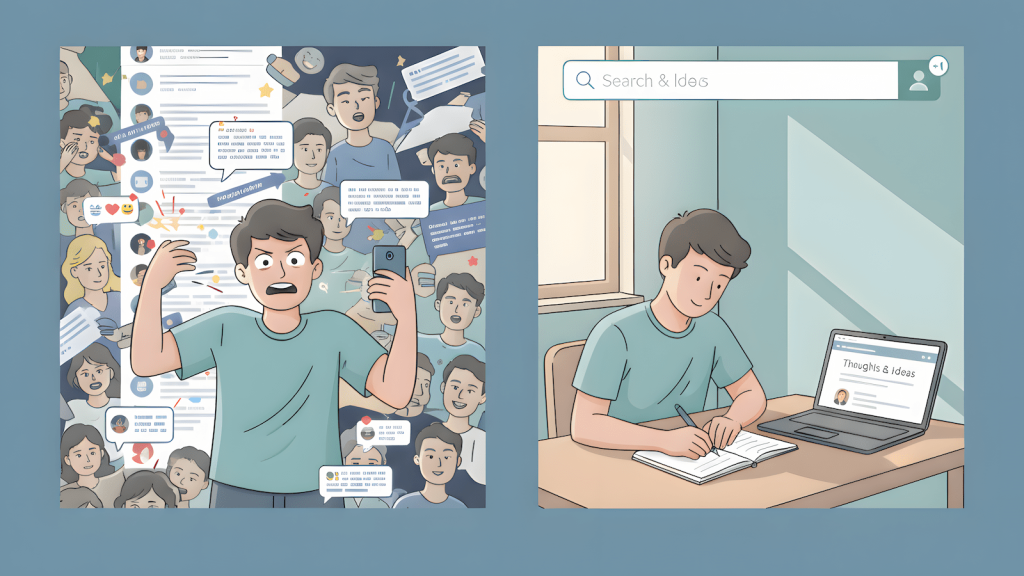
Social media and YouTube are built on attention. They need you to have followers. They need people to care about you, remember you, come back for more. Without an audience, you’re starting at zero every single time.
Blogs work differently.
They’re built on intent.
Someone doesn’t land on a blog post because they follow you. They land because they searched for something specific. They’re not browsing for entertainment. They’re looking for an answer.
That one person. That one visit. That’s enough.
Because when someone shows up with intent, they’re already halfway to a decision. They just need clarity.
Why One-Off Visitors Actually Matter
Here’s what most people miss:
A blog doesn’t need loyalty to function.
You don’t need someone to subscribe, remember your name, or come back next week. You need them to find what they’re looking for, get a clear answer, and move on with their life.
That single visit can still generate value.
Not because you convinced them to care about you. Because you removed friction from something they were already trying to do.
That’s the core mechanic:
- Social media requires an audience first, then monetization
- Blogs allow monetization from a single useful interaction
No relationship required. No loyalty required. No performance required.
What This Looks Like in Practice
Someone searches “best budget standing desk under $300.” Not because they’re bored. Because their back hurts and they need to fix their setup before Monday.
They land on a page. They don’t care who wrote it. They don’t check the author bio. They don’t subscribe.
They skim for what matters: will this desk wobble, does it fit their space, is assembly a nightmare, what’s the return policy.
If the page answers those questions clearly, without filler, without begging them to sign up for a newsletter, they keep reading.
If it compares three solid options and explains why one works better for apartments and another works better for dual monitors, they trust it enough to make a decision.
And when they click through to buy the desk, that interaction carries weight.
Not because you built a relationship. Because you compressed their decision from two hours of confusion into five minutes of clarity.
The visitor leaves. The desk ships. You never interact again.
But the page did work that mattered.
Or someone searches “best webcam for low light video calls“ because their built-in laptop camera makes them look like a grainy ghost on Zoom. They need something under $80 that actually works. Your page tells them which one handles dim rooms without making them look washed out. They click. They buy. They’re happier on their next client call.
Same mechanic. Different product. Same outcome.
Why This Model Doesn’t Punish Silence
On YouTube, if you stop uploading, the algorithm forgets you exist. Your last video gets buried. Your channel flatlines. You’re only as relevant as your last post.
On a blog built for retrieval, a good page from two years ago can still get visited today.
Because the problem it solves didn’t expire. The question people are typing didn’t stop being asked.
And when the answer is still accurate, still useful, still structured to help someone decide, the page keeps working.
You can take a month off. The pages you already published keep getting found. They keep being useful.
That’s what “evolved” actually means.
Blogs stopped being daily diaries and became indexed reference material. And indexed reference material doesn’t need an audience. It needs accuracy, clarity, and timing.
Intent-Based vs Attention-Based
Social rewards constant output and personality-driven performance. Blogs reward clarity and usefulness at the moment somebody needs it.
One is attention-based. One is intent-based.
And intent-based models don’t require fandom.
They don’t require you to be visible every day. They don’t require you to be liked. They don’t require you to perform.
They require you to be useful.
That’s a harder standard in one way, because you can’t fake it long-term. The page either holds up or it doesn’t.
But it’s also calmer, because the work doesn’t evaporate the moment you stop posting.
The Actual Economics
Here’s the part most people don’t connect:
Social platforms pay you to keep people inside the platform. That’s why they reward watch time, engagement, comments, shares. The longer someone scrolls, the more ads they see.
You’re not the customer. You’re the content. The platform is selling attention to advertisers, and you’re the bait.
Blogs work in reverse.
You’re not keeping people on your site. You’re helping them leave. Faster. With less doubt.
The visitor doesn’t need to watch three videos and subscribe. They need an answer and a next step.
And when that happens on a page built for intent, the economics follow.
No followers required. No loyalty required. No one has to remember your name.
You helped someone decide. The page worked. That’s the system.
Why This Is Remote Work
Blogs don’t care where you are. They don’t care what time you write. They don’t care if you post every day or once a month.
You can write a page in Manila on a Tuesday. Someone in Ohio can find it six months later on a Sunday. The page still works.
That’s location independence. That’s schedule flexibility. That’s remote work.
Not a gamble. A strategy with a fallback.
Next: How Blogs Make Money Without Followers (The Actual Method) Talks about the concrete mechanics of how intent-based pages generate income, with real examples.
Full transparency: this article contains affiliate links. Which you probably noticed, since we just spent several paragraphs explaining exactly how they work and why they’re there.
If you click one and buy something, RemoteWorkHaven gets a small percentage. You don’t pay extra. The links only show up where they’re actually useful and not random product dumps.
☕ Or support the work directly if you’d rather skip the middleman.