
The rise of “hush trips” isn’t the crisis some managers think it is. It’s a symptom of broken trust, shallow flexibility, and remote A sick leave filed on a Thursday morning is not always about a fever. Sometimes it is a hush trip, or something close to one, and the person filing it has already decided that being honest about why they need the time would cost them more than staying quiet. I have sat on both sides of that message, as a worker and as the lead approving it, and the part most companies miss is that the silence usually starts with them.
Most coverage of hush trips frames them as a remote worker sneaking off to a beach with a laptop. That version exists, but it is the smallest slice of the problem. The bigger version happens in offices, in hybrid teams, and in freelance setups, and it almost always runs through the same door: a sick leave or a mental health day that nobody is allowed to question.

What a Hush Trip Actually Is
A hush trip is time away from work that the company does not know the real reason for. For a remote worker, it might be a workcation where the laptop comes along and the location never gets mentioned. For an office worker, it is a leave filed under one label while the actual reason stays private, because the actual reason would not survive the approval process.
It does not need a plane ticket to count. Freelancers do it when they quietly push a deliverable to take a breather they cannot afford to explain to a client. Hybrid workers do it when they stack a remote day next to a weekend and keep the reason to themselves. The common thread is not travel, and it is not “work from anywhere.” It is a person who needs time off and has learned that asking for it directly is the harder route.
The reason behind it can be physical sickness or it can be a mental health day. Both end up filed the same way, and both end up hidden for the same reason. The system gave people one door that opens without a fight, so that is the door they use.
Why Sick Leave Is the Default Exit
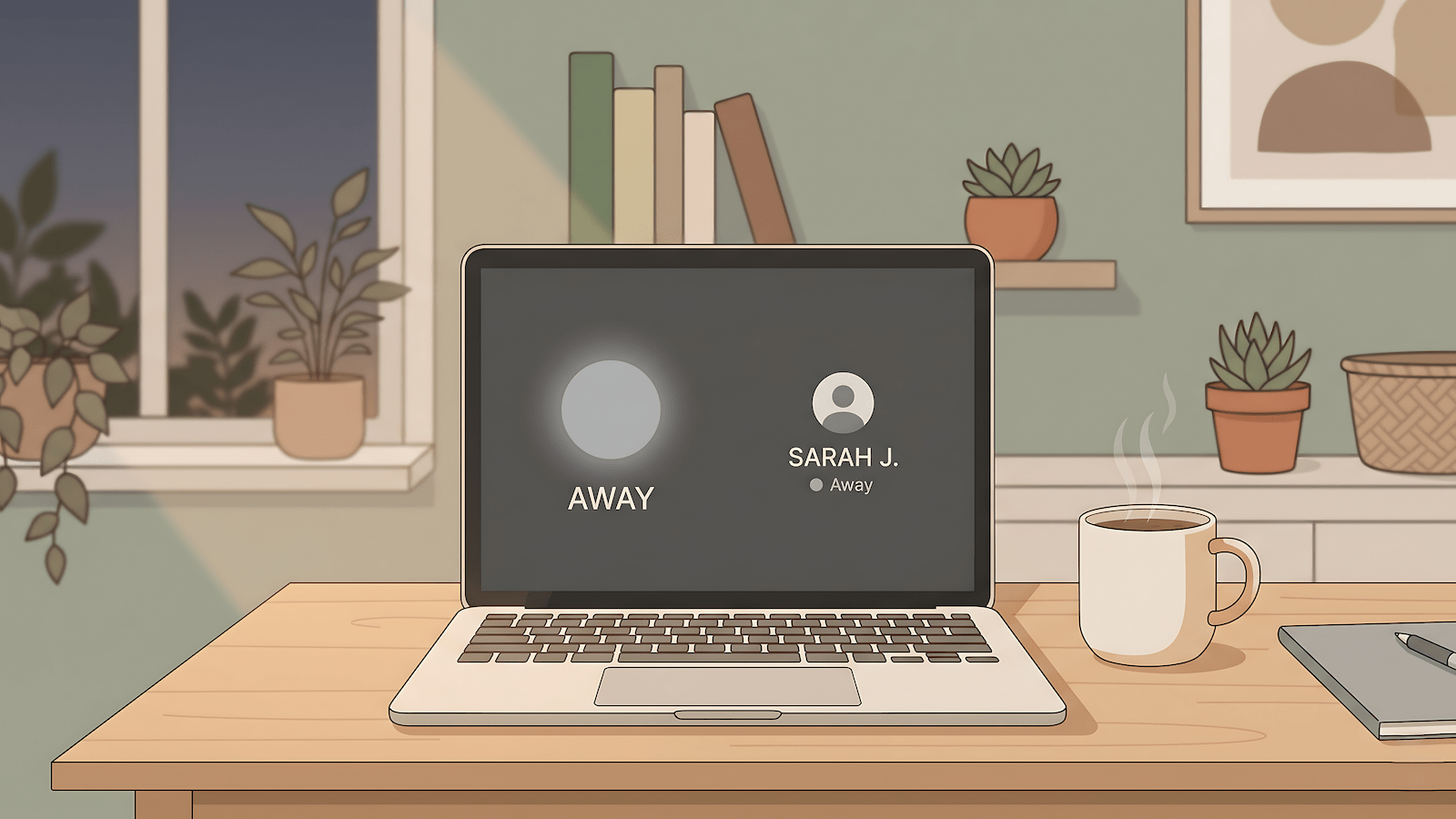
Sick leave is immediate. You send the message in the morning, and you are out that day, with no queue, no approval chain, and no explaining yourself to three levels of management. That speed is exactly why it becomes the tool for everything.
Planned leave works differently in most companies. In my old office, planned leave needed at least 10 days of lead time to get approved, and that was the minimum, not the guarantee. Vacation leave and paid time off look generous on paper, but when every request has to clear red tape, people stop treating time off as something they plan and start treating it as something they take when they can.
So the math is simple from the worker’s side. Planned leave means filing early, justifying it, and hoping it does not get bounced back because of a release date. Sick leave means one message and a day of rest. When the planned route is that heavy, the quick route stops being an emergency option and becomes the normal one.
The Medical Certificate Wall
Most companies put a limit on how far sick leave can go without proof. In our office, a sick leave of 3 days or more needed a medical certificate. Under that, no doctor’s note, no sick note for work, nothing to show.
People figure out that line fast. I actually told my team about it once: if you time your sick leave on a Thursday, you can have a 4 day leave. Thursday and Friday stay under the medical certificate requirement, the weekend covers the rest, and you get four days of actual recovery without a doctor certificate for sick leave and without asking anyone’s permission in advance.
I allowed that, and I would allow it again. The red tape on planned leave was the reason it existed in the first place, and I understood the stress my team was under. When the official process makes rest that hard to get, people will find the gap in the policy, and a lead who pretends that gap does not exist is only choosing not to see it. Sick leave without a medical certificate becomes the workaround because the medical certificate wall is the only thing the policy actually enforces.
A Mental Health Day Is Still Sick Leave
A lot of the sick leave that feeds hush trips is not a cold or a stomach bug. It is a mental health day, filed as a sick day because most leave policies still do not have a clean category for “I am running on empty and I need to step away before I break something.” Mental health days at work are slowly getting named in some policies, but in most teams the honest version of that request still sounds like a weakness.
That is how a mental health day turns into a hush trip. The person is not lying about needing the time. They are hiding the reason because they do not trust how it will be received, and in a lot of workplaces that distrust is earned. When the alternative is a leave of absence for mental health, with paperwork and a conversation with HR, a quiet Thursday sick leave looks like the far safer option.
From where I sat, a mental health day was sick leave, full stop. Burnout does not show up as a temperature, but it takes people out of the work just the same, and treating it as a lesser reason only teaches your team to stop telling you about it. If you want the longer version of why rest is maintenance and not a prize, recharging is not a reward covers it well.
Where the Silence Comes From
Hush trips begin as silence because some companies only think in numbers. Headcount, utilization, attendance, output per sprint. The team behind those numbers turns into a resource to be scheduled, and the people inside it figure that out quickly.
This is where pto policy, time off policy, and sick policy stop being HR documents and start being signals. A time off policy that makes every request a negotiation tells people that rest is something they have to win. Add employee monitoring on top, and people learn to manage how they look instead of how they are actually doing. I have written before about how remote work metrics either mature or kill performance, and leave is where that tension shows up first.
Remote and hybrid teams feel this even more. When your only visibility into a person is a status dot and a ticket count, a remote work policy built around presence pushes the honest conversation further away. That is the same split between metric based and trust based teams in remote work conditioning, and it is why the same hush trip looks like a scandal to one company and a non issue to another.
What I Did as the Lead
My rule was simple. Tell me, and I will approve it.
That was all I needed from my team. Sometimes a PM was all it took, a short private message saying they needed the day, and I could approve it right away. No forms routed through three people, no explaining their personal life to someone who did not need to know. If I trusted them enough to ship work without watching over their shoulder, I could trust them enough to know when they needed a day off.
Part of the job was shielding my team from the higher ups. The people above me saw the numbers, and to them a missing team member was a gap in the plan. I was the one who absorbed that, because I would rather run a man short than lose someone. A delay is better than people just leaving, and a delay is recoverable in a way that losing a good person is not. Building trust in remote teams, or any team, comes down to this. People only stop hiding things from you when telling you stops costing them anything.
This is the same seat change I wrote about in managing a remote team from both sides of the decision. The call looks completely different once you have been the person stuck inside someone else’s policy. I knew what the planned leave queue felt like from the worker’s chair, so I was not going to make my team live through it when a message to me would do.
Where It Stops Being Fine
None of this means sick leave should become a regular cheat code. The Thursday trick works because it is occasional. When a team is stretched and someone needs to breathe, it is a pressure valve. When it turns into a pattern, every other week and always attached to a long weekend, it stops being rest and starts being a problem that someone else on the team is quietly covering for.
That is the line I held. I told my team about the gap in the policy because I trusted them not to abuse it, and most of the time they did not. The trust ran both ways. I approved without questions, and they did not make me regret it.
A lead who allows this also has to be honest when it starts slipping. Letting a pattern slide because you want to be the cool boss is how the rest of the team ends up resenting both the person and you. Shielding people from the higher ups only works if you are also the one keeping the arrangement fair.
If You Are the Worker, and If You Are the Lead
If you are the worker, the honest message is usually smaller than you think. You do not need to explain your whole situation, you need to tell your lead that you need the time. If your lead is the type who approves a PM without a fight, use that route instead of the silent one, because every hush trip that gets discovered makes the next honest request harder for everyone on your team. If your lead is not that type, then the hush trip is telling you something about the company, not about you. The same goes for the bigger version of this, like remote workers quietly moving to smaller towns without telling HR.
If you are the lead, look at how many sick leaves land on Thursdays and Mondays before you look at the people filing them. That pattern is feedback on your leave policy. Make the quick route legitimate: a message to you, a fast yes, and no interrogation. If you notice you want to track who is really sick, that urge is the same one behind micromanaging that kills momentum, and it will push your team further into the silence you are trying to fix. Clear async expectations help too, and async task management etiquette covers how to keep work moving when someone is out.
Hush trips are not rebellion. They are what people do when the honest route to rest costs more than the quiet one. Close that gap, and most of them stop being hush at all.